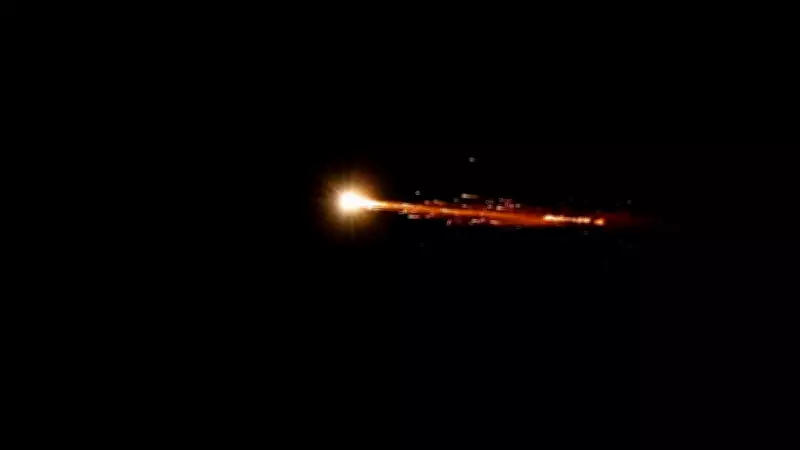
Iran's Missile Arsenal: A Pivotal Force in West Asia Conflict Dynamics
In the volatile landscape of West Asia, Iran's deployment of short and medium-range missiles has emerged as a critical component of its military response strategy. These projectiles are not merely weapons but strategic tools that shape regional power balances and deterrence postures.
The 2020 Retaliation: A Case Study in Missile Warfare
Iran's missile capabilities were starkly demonstrated in January 2020, following a U.S. drone strike that killed General Qassem Soleimani, a high-profile Iranian military commander. In retaliation, Iran launched a barrage of missiles targeting the Ain al-Asad air base in Iraq, which housed U.S. and coalition forces.
This strike underscored Iran's willingness to use its missile arsenal for direct military action, marking a significant escalation in its conflict response tactics. The use of these projectiles allowed Iran to project power across borders without deploying ground troops, highlighting their role as a force multiplier in asymmetric warfare.

Strategic Importance of Short and Medium-Range Missiles
Iran's missile program focuses on systems that can strike targets within a range of approximately 300 to 2,000 kilometers. This includes:
- Short-range missiles, such as the Fateh-110, which are highly accurate and can be deployed rapidly against nearby adversaries.
- Medium-range missiles, like the Shahab-3, capable of reaching strategic locations across the Middle East, including Israel and U.S. bases in the region.
These missiles serve multiple purposes in Iran's defense strategy:
- Deterrence: By maintaining a credible missile threat, Iran aims to deter attacks from regional rivals and global powers.
- Retaliation: As seen in 2020, missiles provide a means for swift and impactful retaliation without engaging in prolonged conflicts.
- Regional Influence: The ability to strike distant targets enhances Iran's leverage in West Asian geopolitics, supporting its allies and countering opponents.
Broader Implications for West Asia Conflict
The reliance on missiles reflects broader trends in the West Asia conflict, where conventional warfare is increasingly supplemented by precision strikes and proxy engagements. Iran's missile arsenal allows it to:
- Respond to perceived threats with calculated force, as demonstrated in the Soleimani aftermath.
- Maintain a strategic edge in a region characterized by ongoing tensions with Saudi Arabia, Israel, and the United States.
- Influence conflict outcomes without direct military confrontation, reducing the risk of full-scale war.
Experts note that Iran's missile development continues to evolve, with advancements in accuracy and payload capacity. This progression suggests that missiles will remain a cornerstone of Iran's military posture in the foreseeable future, potentially escalating regional arms races.
In summary, Iran's short and medium-range missiles are not just weapons of war but integral elements of its national security framework. The 2020 strike on the Iraqi air base serves as a potent reminder of their role in shaping conflict dynamics in West Asia, where every launch carries geopolitical ramifications far beyond the immediate target.