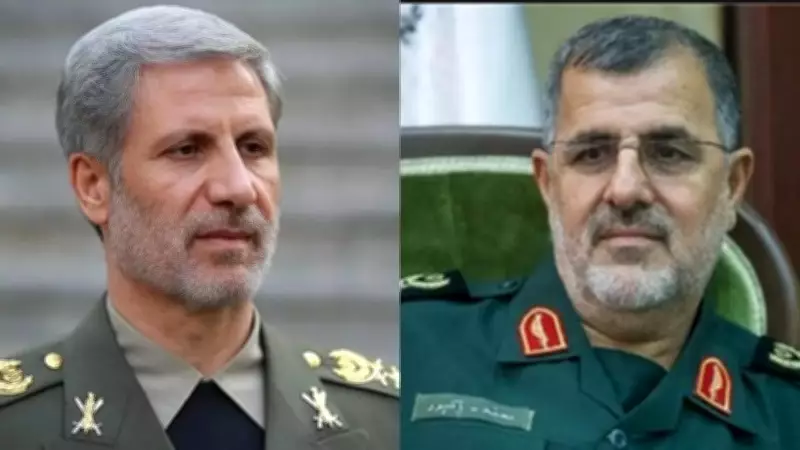
Iran's Defence Minister and Revolutionary Guards Commander Believed Killed in Israeli Attacks
In a significant escalation of hostilities in the Middle East, Iran's Defence Minister Amir Nasirzadeh and Revolutionary Guards commander Mohammed Pakpour are believed to have been killed in Israeli attacks on Saturday, according to three sources familiar with military operations and regional intelligence who spoke to Reuters.
Major Joint Offensive by Israel and United States
The strikes come amid a major joint offensive by Israel and the United States against Iranian targets, which has dramatically escalated tensions in the region and drawn global concern. The coordinated campaign has reportedly targeted top military and political figures within Iran's leadership structure.
Explosions have been reported in multiple Iranian cities, including the capital Tehran, as part of this extensive military operation. The attacks represent one of the most direct confrontations between Israel and Iran in recent years, marking a dangerous new phase in regional conflicts.

Official Status Remains Unconfirmed
Tehran has yet to comment publicly on the status of the two senior officials, leaving their reported deaths unconfirmed by Iranian authorities. The silence from Iranian government channels has created an information vacuum that regional analysts are closely monitoring for any official statements or acknowledgments.
The reported deaths of such high-ranking military figures would represent a significant blow to Iran's defense establishment and could potentially trigger substantial retaliatory measures from Tehran. Both Nasirzadeh and Pakpour held crucial positions within Iran's military hierarchy, with Pakpour commanding the powerful Revolutionary Guards ground forces.
Regional Implications and Global Concerns
This development occurs against a backdrop of increasing regional volatility, with reports of missiles striking the US navy headquarters in Bahrain and explosions heard in Abu Dhabi and Doha. The operation, reportedly named 'Truthful Promise 4' by Iranian forces, has seen Iran attacking US military bases across the Middle East in what appears to be a coordinated response to the Israeli-American offensive.
The situation has created alarm among international observers and diplomatic circles worldwide, with fears that the conflict could spiral into a broader regional war involving multiple state and non-state actors. The targeting of senior military leadership represents a strategic escalation that could have far-reaching consequences for Middle Eastern stability.
As the situation continues to develop, more details are awaited regarding the full scope of the military operations, the extent of casualties, and the potential diplomatic fallout from these unprecedented attacks on Iranian leadership figures. The international community watches with apprehension as one of the world's most volatile regions faces yet another dangerous escalation in long-standing hostilities.