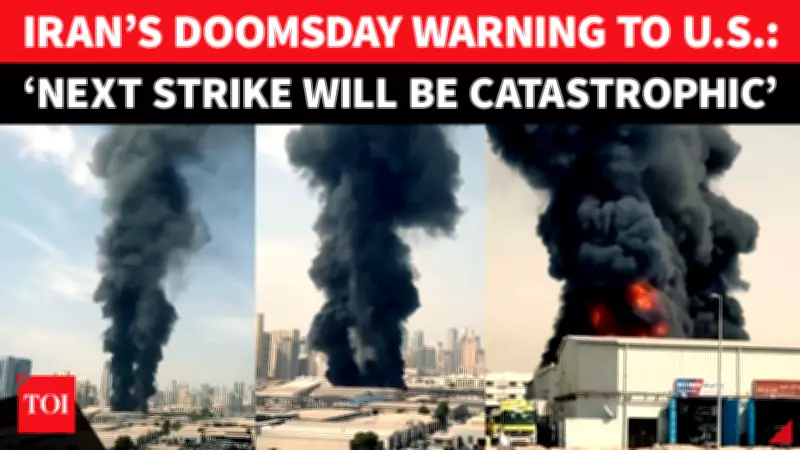
Iran has issued a chilling new warning amid soaring tensions in the Middle East, declaring that any future aggression against the country will trigger a far more severe and potentially wider retaliation. Speaking to Iranian media, military spokesperson Abolfazl Shekarchi warned that if another war breaks out, Iran's response would be heavier, more violent, and more destructive than previous attacks and could extend beyond the region itself.
Escalating Rhetoric
The warning comes as tensions remain dangerously high following recent U.S.-Iran military confrontations in the Strait of Hormuz and fears that the fragile ceasefire could collapse. Tehran has repeatedly accused Washington and its allies of provoking instability through military actions near Iranian territory, while the U.S. insists its operations are acts of self-defense.
Potential for Wider Conflict
Shekarchi's statement marks a significant escalation in rhetoric, suggesting that Iran is prepared to strike beyond the Middle East if provoked. This could involve targeting U.S. interests or allies in other regions, raising the stakes for any future confrontation.

The Strait of Hormuz, a critical chokepoint for global oil shipments, has been a flashpoint. Recent incidents include the IRGC claiming to have downed a U.S. MQ-9 drone and the U.S. military reporting that Iranian boats attempted to lay mines in the strait. The U.S. responded with airstrikes in southern Iran, killing four IRGC members.
Regional and Global Reactions
The international community has expressed concern over the escalating tensions. Saudi Arabia and Pakistan have ruled out normalizing ties with Israel without a Palestinian state, complicating U.S. efforts to expand the Abraham Accords. Meanwhile, China has surrounded Taiwan with warships and fighter jets, adding to global instability.
Iran's warning also comes amid reports of a double agent being hanged for leaking secrets to the U.S. and Israel, and Ukrainian President Zelensky reportedly hiding in a bunker after a Russian missile strike on Kyiv. These events highlight a volatile geopolitical landscape.
As the situation develops, the world watches closely to see whether diplomatic channels can prevent a wider conflict or if Iran's warning will become a reality.