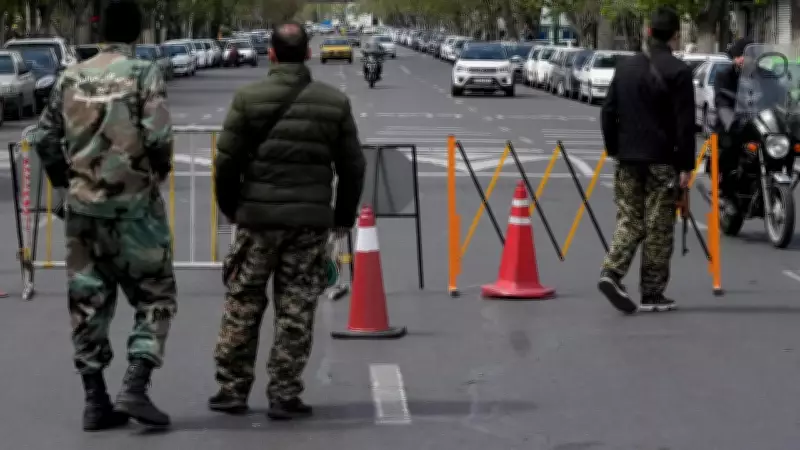
Iran Issues Stern Warning Against Any Territorial Invasion
Iran has issued a forceful warning to any military force attempting to invade its territory, declaring that its armed forces will decisively "cut off the legs" of aggressors. The stark declaration came from Ebrahim Zolfaghari, spokesperson for the Khatam al-Anbiya Headquarters of the Islamic Revolutionary Guard Corps (IRGC), during an interview with state media Press TV on Tuesday.
Zolfaghari emphasized that Iran stands fully prepared to respond with determination and strength to any potential attack on its sovereign territory. This warning emerges amid escalating regional tensions and military confrontations that have spread across multiple Middle Eastern nations.
Regional Conflict Intensifies with Multiple Strikes and Casualties
The Iranian warning coincides with a significant escalation of military actions throughout the Middle East. Iranian media has reported substantial damage to a critical desalination plant located on Qeshm Island in the strategically vital Strait of Hormuz. Despite the heightened tensions, two Chinese container ships successfully navigated through this crucial waterway following careful coordination with regional authorities.

In Tehran, residents reported hearing multiple explosions accompanied by temporary power outages affecting various sections of the capital city. Meanwhile, coordinated US-Israeli air strikes reportedly targeted several Iranian military installations, including damage to the Grand Husseinya, an important Shia religious hall where sections of the dome and minarets sustained significant harm.
Conflict Spreads to Neighboring Countries
The military confrontation has extended beyond Iranian borders, affecting multiple neighboring states with concerning consequences:
- Dubai: Falling debris from intercepted missiles injured four people in southern Dubai, while a Kuwaiti tanker caught fire at Dubai Port, though no casualties were reported from the maritime incident.
- Saudi Arabia: Authorities confirmed two injuries resulting from a drone interception operation in Al-Kharj province, located near the strategically important Prince Sultan air base.
- Israel: Emergency services evacuated eight individuals with minor injuries after munitions fragments fell near Tel Aviv following Iranian missile alerts. Additionally, Israeli forces reported four soldiers killed during clashes with Iran-backed Hezbollah in southern Lebanon.
- Iraq: An explosion occurred near Erbil airport, which hosts US military advisers, while airstrikes targeted two Popular Mobilisation Forces bases in Babil and Anbar provinces without reported casualties.
International Dimensions and Strategic Developments
Press TV has cited reports indicating that Russian Chechen military units stand ready to deploy to Iran should a US ground invasion materialize. This potential international dimension adds complexity to the already volatile regional situation.
In a significant strategic development, Iran's Parliament has approved the comprehensive Strait of Hormuz Management Plan. This new framework imposes tolls on vessels passing through the critical waterway, explicitly bans American and Israeli ships from transit, and strengthens security arrangements through cooperation with Oman.
Speaker of Parliament Mohammad Bagher Ghalibaf accused the United States of secretly plotting a ground invasion while issuing a stern warning to Gulf countries hosting American forces. Ghalibaf emphasized that Tehran would punish any regional partners involved in supporting such military actions against Iran.
International Leadership Perspectives
US President Donald Trump has indicated to his aides that he may wind down military operations in Iran within four to six weeks, even if the Strait of Hormuz remains closed. This potential timeline follows what the administration views as achievement of core objectives, including weakening Iran's naval and missile capabilities.
Israeli Prime Minister Benjamin Netanyahu stated that the military campaign had progressed "beyond the halfway point," though he deliberately declined to provide a specific timeline for its conclusion, maintaining strategic ambiguity about future operations.

The convergence of these developments—from Iran's forceful warnings and Parliament's strategic planning to the spreading regional conflict and international positioning—creates a complex and volatile security landscape across the Middle East with potentially far-reaching consequences for global stability and energy security.