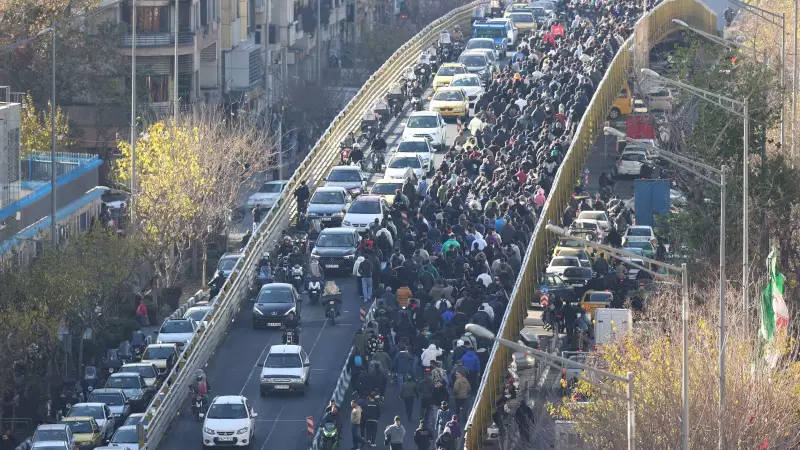
Iran has been rocked by a fresh wave of widespread protests, with reports indicating several people have been killed during the demonstrations. The unrest, which began on Thursday, was sparked by the country's severe economic crisis but has rapidly evolved into a broader expression of public anger against the establishment.
Economic Grievances Ignite Public Fury
The immediate trigger for the protests was a sharp increase in the price of eggs, a staple food, by over 50% in just one week. This price hike served as the final straw for citizens already struggling under the weight of soaring inflation, a collapsing national currency, and chronic unemployment. Videos circulating on social media showed protesters in cities like Mashhad, Kerman, and Ahvaz chanting slogans against the high cost of living and perceived government mismanagement.
However, the demonstrations quickly transcended economic complaints. In a significant development, protesters in several areas began chanting slogans associated with the 2022 Mahsa Amini protests, which were triggered by the young woman's death in morality police custody. This connection suggests a merging of economic discontent with deep-seated grievances over social restrictions and political repression.
Confrontation and Official Response
The protests have reportedly turned violent in some locations. According to the Iranian Human Rights Activists News Agency (HRANA), at least four people were killed in the city of Mashhad on Thursday. The agency stated that security forces opened fire on protesters. Another fatality was reported in the city of Kerman. The total death toll remains unconfirmed by official sources.
Iranian authorities have acknowledged the protests but downplayed their scale. State media reported limited gatherings and blamed "counter-revolutionaries" for instigating the unrest. Internet monitoring groups noted significant disruptions to mobile data services in several provinces, a common tactic used by the government to stifle the flow of information and prevent protesters from organizing.
This new wave of unrest comes just weeks before a crucial parliamentary election scheduled for March 1. The timing is particularly sensitive for the ruling establishment, which is keen to project stability and a high voter turnout.
A Deepening Crisis and Regional Implications
The protests underscore the profound economic challenges facing Iran. Years of international sanctions, coupled with domestic economic policies, have led to a situation where the rial has lost most of its value, and inflation runs rampant. The public's patience is wearing thin, as seen in the rapid spread of the demonstrations from their origin in Sistan and Baluchistan province to major urban centers across the country.
Analysts point out that the government's ability to address the core economic issues is limited without a breakthrough in nuclear negotiations and the lifting of key sanctions. The situation is further complicated by Iran's regional activities and ongoing tensions with the West. The spontaneous nature of these protests, rooted in daily hardship, presents a persistent and unpredictable challenge to Tehran's leadership.
The international community is watching closely. While the immediate focus is on the humanitarian cost and reports of violence, the prolonged instability in Iran has significant implications for regional geopolitics and global energy markets. The coming days will be critical in determining whether the authorities can quell the protests through a combination of force and economic concessions, or if the public's anger will fuel a more sustained movement.