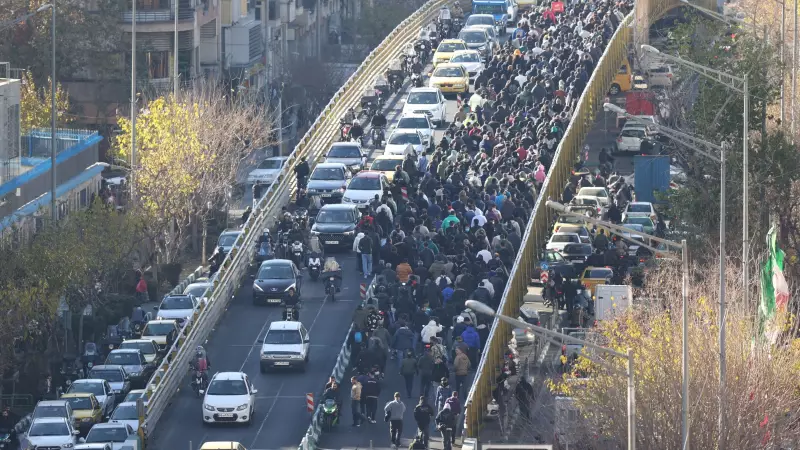
Public anger over a severe economic crisis has boiled over into the streets of Iran, with protests erupting in multiple provinces. Citizens are expressing their frustration over skyrocketing prices for essential food items, severe water shortages, and the government's perceived failure to address the collapsing standard of living.
Economic Despair Fuels Public Anger
The protests, which began on Friday, have spread to several regions including Khuzestan, Tehran, Isfahan, and Kurdistan. The immediate trigger appears to be a sudden and sharp increase in the prices of staple foods. Reports indicate that the cost of items like eggs, milk, and chicken has surged by as much as 300% in some areas, placing them out of reach for many ordinary Iranians.
This price hike is compounded by a crippling drought and mismanagement of water resources, leading to critical shortages. In Khuzestan, a southwestern province, the water crisis has been particularly acute, affecting both drinking water and agriculture. The combination of unaffordable food and scarce water has created a desperate situation for households already struggling under the weight of years of US sanctions and domestic economic mismanagement.

Authorities Respond with Internet Restrictions
In a move now familiar during periods of unrest, Iranian authorities have imposed significant disruptions to internet access. Mobile data networks have been throttled or completely shut down in protest-affected areas. The NetBlocks internet observatory confirmed a nation-scale disruption to mobile internet connectivity starting late Friday, with services on major providers like Irancell, Rightel, and Mobile Communication Company of Iran (MCI) heavily impacted.
This tactic is widely seen as an attempt to curb the organization of protests and prevent the spread of images and videos from the demonstrations. Similar internet blackouts were employed during major protest waves in 2019 and 2022. The restrictions severely limit the flow of information both within Iran and to the outside world.
A Pattern of Grievances and Government Crackdowns
The current protests, while sparked by immediate economic concerns, are part of a broader pattern of public discontent in Iran. The country has witnessed several major waves of demonstrations in recent years, often triggered by economic hardship but expanding to include wider political grievances.
In 2022, nationwide protests erupted following the death of Mahsa Amini in the custody of the morality police, focusing on social freedoms. The 2019 protests were directly fueled by a sudden increase in fuel prices. The government's response has consistently involved a combination of internet shutdowns, arrests, and a heavy security presence.
As of now, there are no official figures on the number of protesters detained or potential casualties from the latest demonstrations. The situation remains fluid, with the potential for further escalation if the underlying economic issues are not addressed. The protests underscore the deepening cost of living crisis and the growing chasm between the Iranian populace and its leadership.