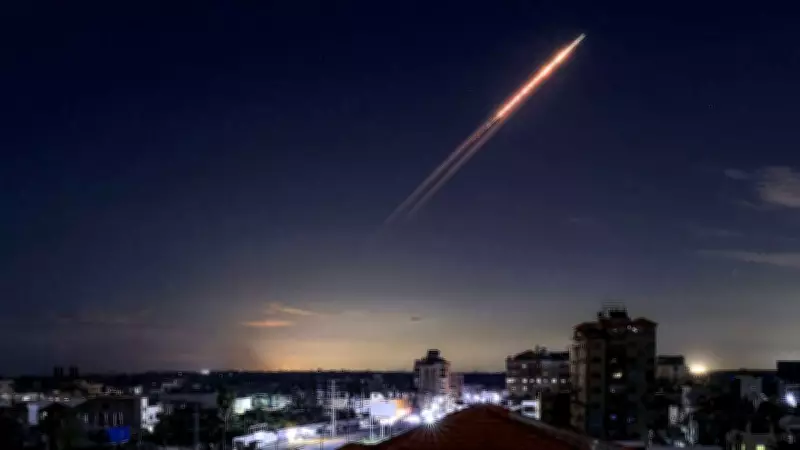
Iran Deploys Advanced Khorramshahr-4 Missile Amid Escalating West Asia Tensions
As the conflict in West Asia enters its sixth consecutive day, Iran has significantly escalated military operations by launching its formidable long-range Khorramshahr-4 ballistic missile. This advanced weapon system, which is capable of delivering a substantial one-ton warhead, marks a critical development in the ongoing regional hostilities, raising concerns about further destabilization.
Technical Specifications and Strategic Implications
The Khorramshahr-4 represents a key component of Iran's missile arsenal, designed for long-range precision strikes. With its ability to carry a warhead weighing up to one ton, this missile enhances Iran's offensive capabilities, potentially altering the strategic balance in West Asia. Analysts note that such deployments are often intended as a show of force, signaling readiness to engage in high-intensity conflicts.
Military experts emphasize that the launch underscores Iran's commitment to bolstering its defense posture amid the protracted warfare. The timing of this action, coinciding with the sixth day of the conflict, suggests a deliberate move to assert dominance and deter adversaries from escalating their own military activities.

Regional Context and International Reactions
The West Asia region has been embroiled in intense fighting for nearly a week, with multiple nations involved in skirmishes and broader geopolitical maneuvers. Iran's missile launch is viewed as a direct response to these tensions, potentially exacerbating the volatile situation. International observers are closely monitoring the developments, wary of the risk that such advanced weaponry could lead to a wider conflagration.
Global powers have expressed alarm over the escalation, calling for restraint and diplomatic solutions to prevent further bloodshed. The use of ballistic missiles like the Khorramshahr-4 raises particular concerns due to their potential for causing significant destruction and civilian casualties, highlighting the urgent need for de-escalation efforts.
Historical Background and Future Projections
Iran has a history of developing and testing various missile systems as part of its national defense strategy. The Khorramshahr series, in particular, has evolved over the years, with the latest version showcasing enhanced range and payload capabilities. This launch may indicate Iran's intent to modernize its military assets in response to perceived threats in the region.
Looking ahead, the continuation of the conflict into its sixth day suggests that hostilities are unlikely to abate soon. The deployment of the Khorramshahr-4 missile could prompt retaliatory measures from opposing forces, potentially leading to a cycle of escalation. Stakeholders are urged to prioritize dialogue and conflict resolution to avert a prolonged humanitarian crisis.
In summary, Iran's launch of the Khorramshahr-4 missile with a one-ton warhead represents a significant escalation in the West Asia conflict, now in its sixth day. This development underscores the region's precarious security environment and the critical importance of international diplomacy in mitigating further violence.