

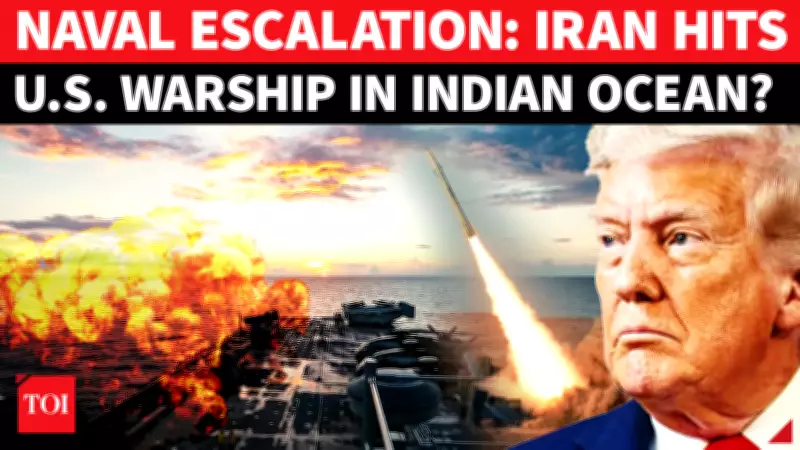
Iran's IRGC Claims Strike on US Warship in Wave 98 Operation; US Military Denies
In a significant escalation of hostilities, Iran's Islamic Revolutionary Guard Corps (IRGC) has asserted that it successfully targeted and hit the United States amphibious assault ship LHA-7 during what it terms "Wave 98" of Operation True Promise 4. According to Iranian statements, this naval action forced the American vessel to retreat from the region. However, the United States Central Command (CENTCOM) has swiftly and categorically denied this claim, labeling it as a lie and confirming that the USS Tripoli remains fully operational and undamaged.
Conflicting Narratives Intensify Amid Broader Strikes
The alleged incident is part of a broader series of actions reported by Tehran, which include strikes on multiple targets across the Middle East. Iran claims to have hit an Israeli-linked commercial ship, a drone hub in the United Arab Emirates (UAE) that is connected to Israel, and several Israeli cities, notably Tel Aviv and Haifa. These assertions come amidst a noticeable intensification of military activities, involving missiles, drones, and naval engagements, which are raising tensions throughout the Persian Gulf and beyond.
Expert analysts suggest that these conflicting reports between Iran and the US signal a dangerous new phase in the ongoing regional conflict. The expansion of targets beyond direct military assets to include civilian-linked infrastructure and urban centers indicates a potential shift in strategy, possibly aimed at exerting maximum pressure and demonstrating capability.

Background and Implications of the Escalation
Operation True Promise 4, under which Wave 98 is conducted, represents Iran's continued response to perceived threats and engagements in the region. The involvement of the US Navy, a key ally of Israel, adds a layer of complexity and risk of direct confrontation between major powers. The denial from CENTCOM underscores the high-stakes nature of information warfare in modern conflicts, where claims and counterclaims can influence diplomatic and military outcomes.
Recent developments have seen an increase in such incidents, with both sides leveraging media and official channels to shape narratives. The situation remains fluid, with international observers closely monitoring for any verifiable evidence or further escalatory actions. The broader context includes ongoing tensions between Iran and Israel, as well as Iran's disputes with Gulf Arab states and the United States over nuclear programs and regional influence.
Key Points from the Reports
- Iran's IRGC claims to have struck US amphibious assault ship LHA-7, forcing its retreat.
- US CENTCOM denies the claim, stating USS Tripoli is operational and calling it false.
- Tehran also reports strikes on an Israeli-linked ship, a UAE-Israel drone hub, and Israeli cities including Tel Aviv and Haifa.
- Military actions involve missiles, drones, and naval engagements, heightening Gulf tensions.
- Conflicting narratives suggest a dangerous escalation in the Middle East conflict.
As the situation develops, the international community is urging restraint and dialogue to prevent a full-scale war. The accuracy of the claims remains unverified, but the potential for miscalculation and broader conflict is a growing concern among global leaders and security experts.






