

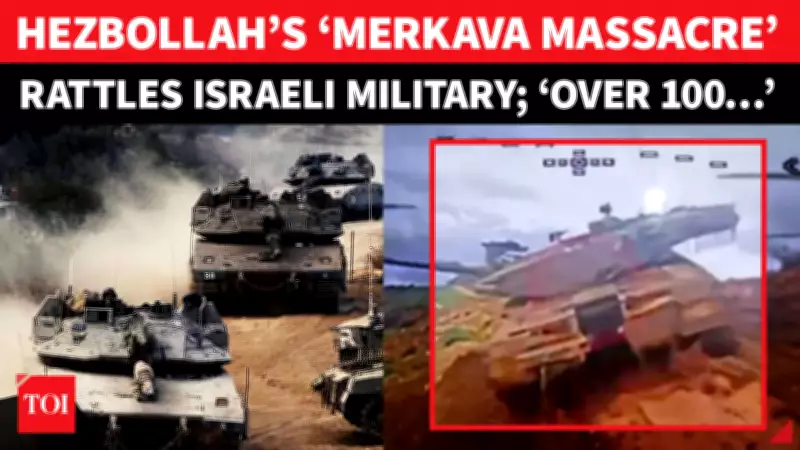
Hezbollah Inflicts Major Losses on Israeli Armor in Coordinated Border Strikes
In a significant escalation of hostilities, the Lebanese militant group Hezbollah has claimed responsibility for destroying nearly 100 Israeli Merkava main battle tanks in a series of coordinated missile and drone attacks across southern Lebanon and northern border regions. The group described the intensive 48-hour assault as a "Merkava massacre," reporting dozens of successful strikes against the high-value armored vehicles.
Strategic Targets and Tactical Execution
The attacks specifically targeted multiple strategic locations including Debel, Al Qantara, and Taybeh using precision-guided missiles and unmanned aerial vehicles. Hezbollah's military media released footage showing multiple tank engagements, though independent verification of the exact damage assessment remains pending. The strikes represent one of the most substantial armored vehicle losses reported by Israel in recent conflicts.
Cost Disparity Highlights Asymmetric Warfare Advantage
Military analysts are highlighting the significant cost disparity between Hezbollah's relatively low-cost missile systems and Israel's sophisticated Merkava tanks, each valued at approximately $6 million. This economic asymmetry presents strategic challenges for Israeli defense forces, as Hezbollah can potentially inflict substantial financial damage through comparatively inexpensive attacks.

The intensified attacks come after months of escalating tensions along the Israel-Lebanon border, with periodic exchanges of fire gradually increasing in frequency and intensity. This latest development marks a significant qualitative shift in the conflict, moving beyond sporadic rocket fire to targeted armor destruction operations.
Regional Implications and Conflict Dynamics
The substantial tank losses reported by Hezbollah could potentially alter the military balance along the volatile border region. Israeli defense officials have not yet issued a comprehensive statement regarding the specific damage assessment, though the scale of claims suggests a major engagement has occurred. The conflict between Hezbollah and Israeli forces continues to represent one of the most persistent flashpoints in the broader Middle East security landscape.






