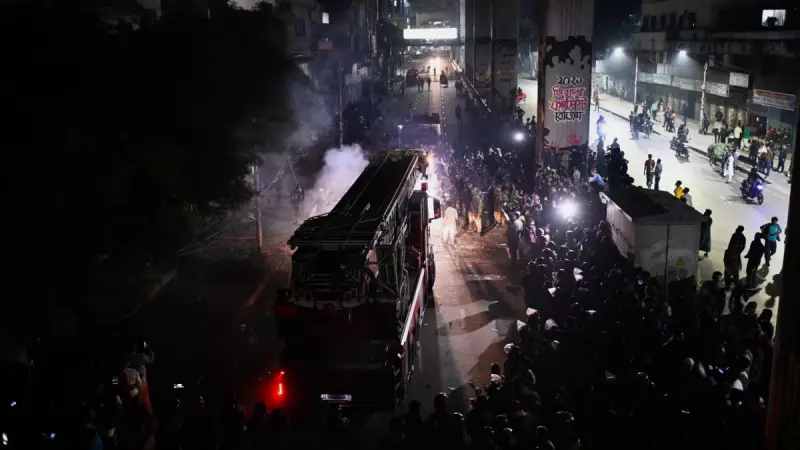
Bangladesh has been rocked by a wave of massive and violent protests following the death of a student, Osman Hadi, with demonstrators directing their anger towards India. The unrest, which erupted on December 19, 2025, has seen clashes with law enforcement, widespread property damage, and the raising of strong anti-India slogans, marking a significant escalation in public sentiment.
What Sparked the Widespread Unrest?
The catalyst for the turmoil was the death of Osman Hadi, a student whose passing under disputed circumstances ignited public fury. While initial reports were unclear, the perception among protesters is that his death was linked to political or systemic failures. This incident acted as a flashpoint, channeling deeper, pre-existing frustrations among the populace, particularly students and youth groups.
Protests quickly spread from the capital, Dhaka, to other major cities. Demonstrators took to the streets in large numbers, blocking key roads and highways, bringing traffic to a standstill. The situation turned violent as some groups clashed with police, leading to reports of injuries on both sides. Public and private vehicles were vandalized, and instances of arson were reported, painting a picture of a nation grappling with intense civil disorder.

Anti-India Sentiment Takes Center Stage
A defining and highly sensitive feature of these protests has been the vocal expression of anti-India sentiment. Protesters were heard chanting slogans critical of India and its perceived influence in Bangladesh's internal affairs. This public airing of grievances against the neighboring giant adds a complex diplomatic dimension to the domestic crisis.
Analysts suggest this anti-India rhetoric may stem from a combination of factors, including economic concerns, political alliances, and a narrative of external interference. The slogans indicate that for a section of the protesters, India is viewed as part of the problem, whether directly or by association with the current power structure in Dhaka.
Government Response and Mounting Tensions
Faced with the escalating violence, Bangladeshi authorities have responded with a significant show of force. Police and security forces have been deployed in large numbers to key protest sites and government buildings in an attempt to restore order. There have been confirmed reports of authorities using tear gas and other crowd-control measures to disperse the aggressive mobs.
The government has also initiated actions to identify and apprehend those responsible for inciting violence and vandalism. However, these measures have so far done little to quell the public anger. The core demand from the protestors remains a call for justice for Osman Hadi and a transparent investigation into the events leading to his death. Until these demands are addressed in a manner perceived as credible by the public, the situation remains volatile.
The protests underscore a period of deep political and social tension within Bangladesh. The fusion of a domestic tragedy with broader geopolitical frustrations has created a potent and dangerous mix. The coming days will be critical in determining whether the situation de-escalates through dialogue or spirals further into instability, with potential implications for regional relations.