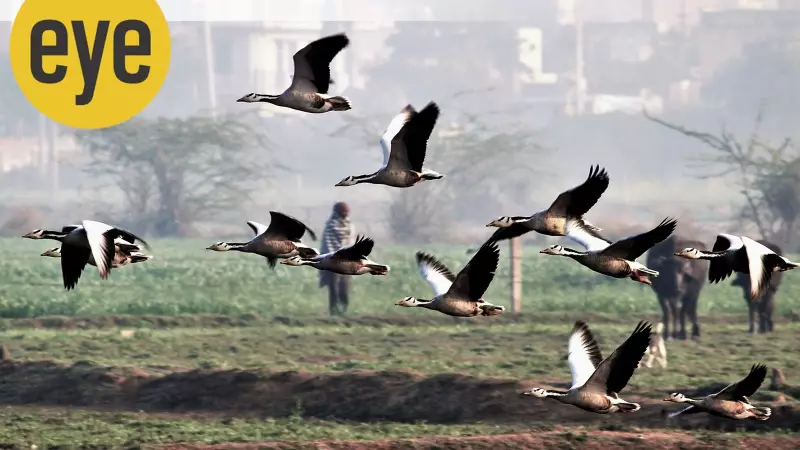
As the northern autumn deepens, a monumental natural event unfolds across the skies. Millions of birds, from tiny warblers to majestic cranes, begin an arduous journey from their breeding grounds in Siberia, Central Asia, and Northern Europe towards the welcoming warmth of the Indian subcontinent. This annual migration is a desperate flight for survival, driven by the impending freeze of their northern homes.
The Great Escape: From Frozen North to Tropical Refuge
The trigger for this mass exodus is the changing light. Photoperiodism – the biological response to daylight hours – signals the birds to prepare. They feed frantically, building fat reserves, and sharpen their flying skills with their young. When the moment is right, they take to the skies in vast flocks. Smaller species often travel by night, while larger birds like geese and cranes form dramatic formations by day.
Their breeding grounds, once teeming with insects and life, are destined to become frozen, barren landscapes for months. This migration is not a choice but a necessity for survival. The routes are diverse and awe-inspiring. While swallows from the UK head to Africa, a huge wave of waterfowl, waders, and passerines stream towards the Himalayas.

Some, like the remarkable bar-headed geese, perform the astounding feat of flying over the Himalayas, including Mount Everest. Others, like the Amur falcon, travel from China across India, resting in Arunachal Pradesh and even Goa, before embarking on a daring transoceanic flight to West Africa. The champion of endurance is the bar-tailed godwit, which undertakes a non-stop 13,600 km journey from Alaska to New Zealand.
India's Welcoming Wetlands: Critical Pitstops and Destinations
For countless species, India's diverse ecosystems become their winter home. While many birds find sanctuary in the wetlands around Delhi, attracting flocks of bundled-up birdwatchers, others venture further south to key sites like Pulicat Lake in Andhra Pradesh and Point Calimere in Tamil Nadu.
These visitors are greeted by India's resident bird species, such as the spot-billed duck, without hostility. There are no borders or visas in the avian world. The migrants blend in, with waders adorned in cryptic patterns of brown, grey, and white, and tiny warblers – some weighing just 10 grams after flying 8,000 km – often frustrating birders as "little brown jobs."
Conservation efforts, like radio tagging, help scientists trace and protect these critical migratory routes. The story of the Siberian crane serves as a sobering reminder of the dangers; a flock that once wintered at Keoladeo National Park in Bharatpur was tragically wiped out by hunting over Afghanistan and Pakistan.
A Spectacle of Arrival and the Cycle of Life
The arrival of these birds is a breathtaking spectacle. The sky fills with skeins of cranes and storks in echelon formations, their haunting calls echoing. Geese honk loudly in classic V-shapes, while ducks whistle past like fighter jets before plummeting to water with heart-stopping suddenness.
As winter wanes and spring approaches, a transformation occurs. Male migrants, especially among waders, molt into vibrant breeding plumage of russet, gold, and black. Courtship chases and squabbles break out on water bodies. Then, one day, the wetlands fall silent again as the great flocks depart, leaving only the resident species behind.
The exhausted travelers return north to restart the cycle of life, some with new mates, others reuniting with old partners. This incredible phenomenon isn't limited to birds. Even insects like the North American monarch butterfly undertake similar generational journeys to Mexico to escape the winter.
This annual migration underscores India's vital role as a global biodiversity refuge. Protecting these wetlands and grasslands is not just a national duty but a part of an international ecological pact, written in the flight paths of millions of winged visitors.