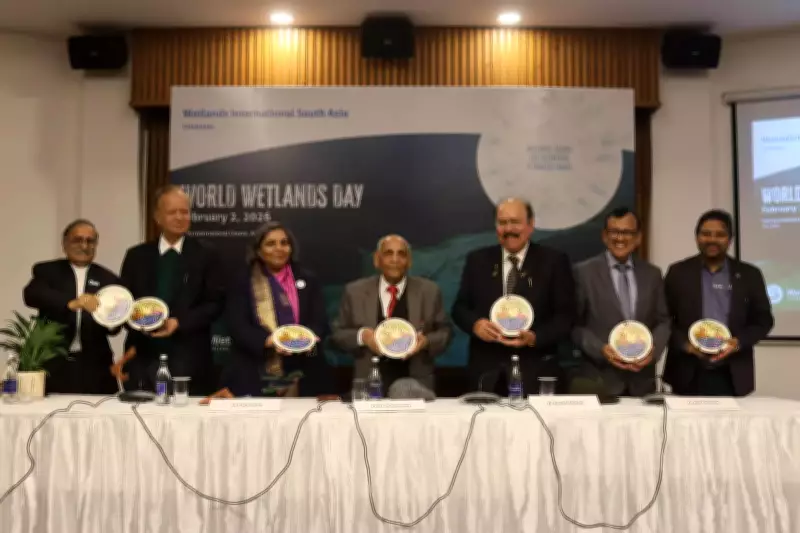
Wetlands Day 2026 Event in Delhi Highlights Cultural and Ecological Significance
In a significant gathering to mark World Wetlands Day 2026, experts and stakeholders convened in New Delhi to emphasize the profound cultural and ecological value of wetlands. The public event, organized by Wetlands International South Asia, was held at the India International Centre Annexe, focusing on the global theme “Wetlands and traditional knowledge: Celebrating cultural heritage.”
Wetlands as Civilizations in Water
Delivering the keynote address, Dr. Balakrishna Pisupati, Head of the United Nations Environment Programme (UNEP) – India, underscored the deep-seated connections between wetlands and human civilizations. “Wetlands are civilizations in water. They are inseparable from culture, livelihoods, food systems, and human wellbeing,” Dr. Pisupati stated. He elaborated that traditional knowledge is not merely folklore but represents applied, experience-based science that has evolved over generations.
Dr. Pisupati called for a respectful integration of this traditional wisdom with modern scientific approaches, asserting that such a fusion is essential for effective wetland conservation in the face of a changing climate. He highlighted the Ramsar Convention as a critical framework and urged for stronger mainstreaming of traditional knowledge across policies related to biodiversity, climate, health, and food security.

Panel Discussion on Governance and Regulation
The event featured a panel discussion titled “Strengthening wetlands regulation and governance in India,” chaired by Dr. Siddharth Kaul, President of Wetlands International South Asia. Leading experts, including Dr. Asad Rahmani, Dr. Ajit Pattnaik, Dr. P. N. Vasanti, and Prof. C. K. Varshney, participated in the dialogue. The discussion critically examined several key issues:
- Gaps in enforcement of existing regulations
- Fragmented institutional responsibilities
- Limited public awareness about wetland importance
- The urgent need for science-based, participatory, and culturally informed management strategies
Prof. C. K. Varshney stressed that conservation efforts must transcend symbolic recognition and translate into tangible on-ground actions. “Ramsar designation or legal notification should be the beginning of conservation, not the end,” he remarked. He advocated for strengthened governance, improved enforcement, and the treatment of traditional knowledge as a core asset rather than an afterthought.
Call for Sustained Dialogue and Community Participation
Earlier in the event, Dr. Ritesh Kumar, Director of Wetlands International South Asia, welcomed participants and called for sustained dialogue and clearer communication regarding the ecological and societal rationale for wetland conservation. He noted the growing pressures from land-use changes and hydrological alterations that threaten these vital ecosystems.
Prof. Varshney further emphasized the necessity of catchment-scale thinking and active community participation in wetland management. “India’s wetlands will only survive if governance is strengthened, enforcement is improved, and traditional knowledge is treated as a core asset,” he asserted, highlighting the need for holistic and inclusive approaches.
Release of Publications and Technical Resources
The event also witnessed the release of several important publications and technical resources aimed at bolstering wetland conservation efforts. These included:
- Sarovar, Volume X, the annual newsletter of Wetlands International South Asia
- Various technical materials designed to support governance and assessment
- Three thematic posters focusing on:
- The World Wetlands Day 2026 theme
- High-altitude wetlands
- Integrated wetland management for wise use
These resources are intended to strengthen governance frameworks, enhance community engagement, and facilitate long-term monitoring of wetland ecosystems.

Broad Participation and Concluding Remarks
The program was attended by 61 participants representing a diverse array of sectors, including government agencies, international organizations, academia, civil society, expert institutions, and the media. This broad participation underscored the multidisciplinary interest and commitment to wetland conservation.
The event concluded with a vote of thanks delivered by Dr. Asghar Nawab, Programme Head (Aquatic Ecology) at Wetlands International South Asia, marking a successful commemoration of World Wetlands Day 2026 and reinforcing the critical message of integrating traditional knowledge with contemporary conservation practices.