The 'Walking Tree' of the Amazon: Unraveling Nature's Captivating Illusion
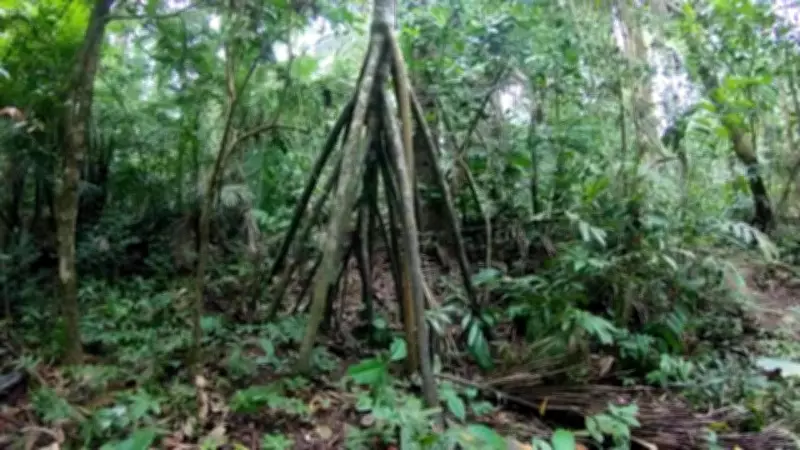
Deep within the lush expanse of the Amazon rainforest, a remarkable palm species, Socratea exorrhiza, has long captivated imaginations with a persistent myth. Often dubbed the "walking tree," it is reputed to slowly migrate across the forest floor, shifting a few centimetres each year in pursuit of sunlight. This enchanting claim has been widely propagated in travel narratives and documentaries, transforming the tree into a symbol of a dynamic, living forest. However, scientific inquiry reveals a more nuanced reality: the tree does not actually walk. Instead, what observers perceive is a subtle illusion crafted by its unique root growth and adaptation in the dense, ever-changing Amazon ecosystem.
What Creates the Illusion of Movement?
The distinctive appearance of Socratea exorrhiza stems from its stilt roots, which elevate the trunk above the ground and splay outward like legs. Unlike conventional trees that anchor themselves with subterranean roots, this palm relies on a cone-shaped network of above-ground supports. This structure is highly responsive to environmental shifts. In the Amazon, fluctuating light conditions, unstable soil due to rainfall and decay, and debris from falling trees constantly alter the terrain. In response, the palm grows new roots toward more favourable areas, while older roots on less supportive sides gradually weaken and perish.
As this ongoing process unfolds, the tree's centre of support subtly changes. The trunk may tilt slightly or appear to reposition itself, particularly when viewed over extended periods. Without fixed reference points in the chaotic forest, these gradual adjustments can foster the impression that the tree has moved, even though it remains firmly rooted in its original location.

Scientific Evidence Debunks the 'Walking' Claim
Despite the compelling illusion, scientific research consistently refutes the notion that these trees physically traverse the forest floor. Studies on Socratea exorrhiza have found no measurable horizontal displacement of the trunk over time. Tropical ecologist Gerardo Avalos, who has extensively researched these palms in Central and South America, asserts that there is no reliable evidence supporting relocation. While the roots are dynamic and adapt to environmental changes, the trunk stays anchored in place.
Claims of the tree moving several centimetres annually are frequently repeated but lack support from controlled measurements or long-term data. Researchers from institutions like the Smithsonian Tropical Research Institute describe the stilt roots as an adaptive feature for stability and flexibility, not for movement. From a biological standpoint, true locomotion would necessitate uprooting and re-anchoring, a capability no known tree species possesses. Instead, this palm exhibits a slower process of structural adjustment, which, combined with human perception, has perpetuated the enduring myth.
Evolutionary Advantages of the Unusual Root System
The Amazon rainforest presents formidable challenges for plant life, including loose soil, heavy rainfall, and continuous decomposition. In such conditions, the stilt roots of Socratea exorrhiza offer stability by distributing weight across multiple points. They also enable the tree to adapt to uneven terrain, such as fallen logs or shifting ground. Some scientists propose that this structure may aid younger trees in surviving shaded environments by allowing flexible growth as they compete for limited sunlight.
Local Lore and the Persistence of the Myth
Despite scientific explanations, the idea of a walking tree remains popular in regions like Ecuador and Peru. Local guides often describe the tree as capable of slow migration, especially after environmental disturbances such as storms or canopy shifts. These stories endure because the changes in the root system are genuine but occur gradually. Without precise, long-term observation, it is easy to misinterpret these subtle shifts as movement, reinforced by the tree's leg-like appearance.

A Mystery Rooted in Perception
In reality, the "walking tree" is not moving but adapting. Its evolving root system reflects a response to environmental pressures rather than any form of locomotion. Yet, the illusion is potent enough to blur the line between observation and imagination. Ultimately, Socratea exorrhiza exemplifies how natural processes can be easily misinterpreted. What appears as movement is merely life adjusting to survive, slowly and quietly, in one of Earth's most dynamic ecosystems.