US Naval Blockade on Iranian Ports Halts All Maritime Traffic in Initial 24 Hours
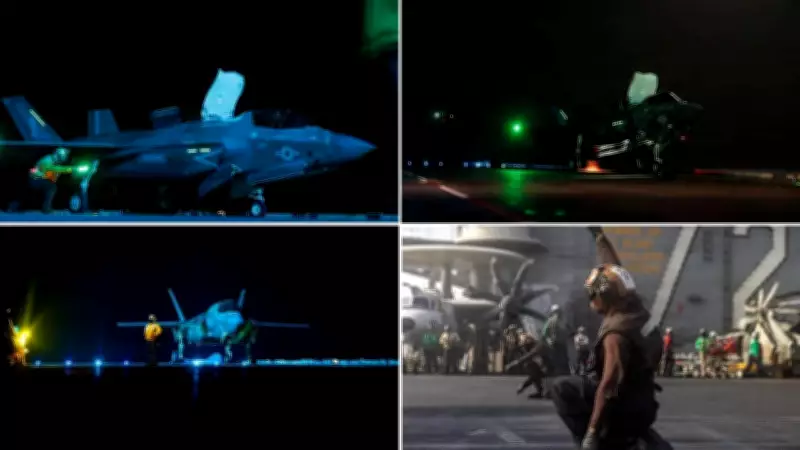
The United States has initiated a comprehensive naval blockade targeting Iranian ports, with US Central Command confirming that no ships managed to navigate through the Strait of Hormuz during the first 24 hours of the operation. This enforcement action, involving more than 10,000 Sailors, Marines, and Airmen supported by over a dozen warships and numerous aircraft, aims to intercept vessels entering or departing Iranian coastal areas. The blockade commenced following the expiration of a deadline set by former President Donald Trump, significantly escalating tensions across West Asia.
Impartial Enforcement and Immediate Impact on Shipping
In a statement released on social media platform X, CENTCOM detailed that six merchant vessels complied with US directives to turn back and re-enter an Iranian port on the Gulf of Oman, with no ships successfully breaching the blockade. The operation is being applied impartially to vessels of all nations linked to Iranian ports, including those on the Arabian Gulf and Gulf of Oman, while technically permitting transit between non-Iranian destinations. However, the substantial US naval presence has already caused disruptions, with multiple ships reportedly altering their courses.
Admiral Brad Cooper, CENTCOM Commander, emphasized that the blockade has been fully implemented, leveraging US maritime superiority in the Middle East. He highlighted that an estimated 90% of Iran's economy relies on international sea trade, and within less than 36 hours, US forces have completely halted economic maritime activities into and out of Iran. The United Kingdom Maritime Trade Operations corroborated these reports, noting enforcement of restrictions affecting Iranian ports and coastal regions along the Arabian Gulf, Gulf of Oman, and Arabian Sea east of the Strait of Hormuz.

Strategic Significance and Global Repercussions
The Strait of Hormuz, a critical global energy chokepoint, has become a major flashpoint after the collapse of peace talks in Pakistan. Prior to the conflict, nearly one-fifth of the world's oil supply transited through this narrow passage, and current disruptions have already driven global oil prices higher. The US has deployed significant naval assets, including carrier strike groups and guided-missile destroyers like the USS Abraham Lincoln, to enforce the blockade. These forces are tasked with intercepting, inspecting, and potentially diverting ships associated with Iranian ports.
Despite this show of force, enforcing a blockade in the heavily trafficked and narrow strait presents considerable complexities. The region typically experiences high volumes of commercial shipping, and analysts caution that sustaining such an operation will require ongoing large-scale military deployment. Legal experts have pointed to constraints under international law, noting that blockades must be impartial, formally declared, and allow for humanitarian supplies.
Diplomatic Efforts and Broader Implications
Concurrently, diplomatic initiatives are underway to prevent further escalation. French President Emmanuel Macron announced that France and the United Kingdom will host a conference in Paris, bringing together over 40 countries to ensure freedom of navigation through the Strait of Hormuz. In a parallel development, Prime Minister Narendra Modi of India spoke with President Trump, with both leaders stressing the importance of maintaining the strait's openness and security.
The blockade is widely perceived as a dual military and economic pressure tactic aimed at curbing Iran's oil exports. However, analysts warn of escalation risks, including potential retaliatory measures that could further disrupt global shipping and energy markets. This situation underscores the delicate balance between enforcement actions and regional stability in a geopolitically volatile area.