

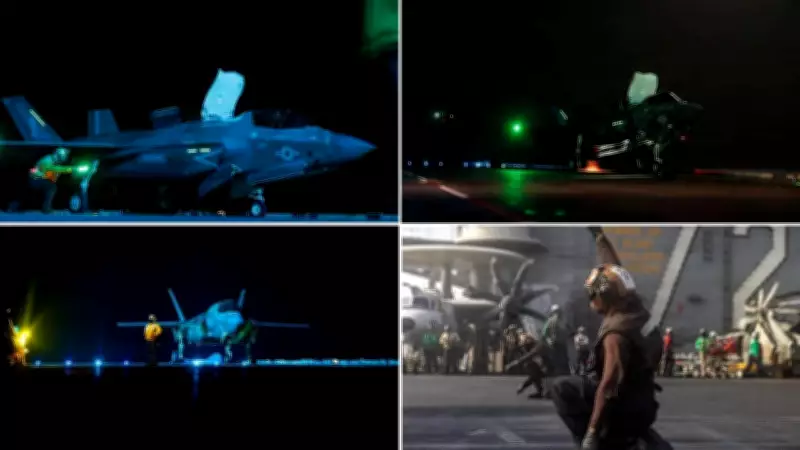
US Naval Blockade on Iranian Ports Achieves Total Shutdown in Initial 24 Hours
The United States has initiated a comprehensive and sweeping naval blockade targeting all Iranian ports, with US Central Command (CENTCOM) confirming a complete halt to maritime traffic in the critical Strait of Hormuz during the first full day of operations. This decisive military action marks a significant escalation in regional tensions, following the expiration of a deadline set by former President Donald Trump.
Massive Military Deployment Enforces Strict Maritime Restrictions
More than 10,000 US Sailors, Marines, and Airmen are actively participating in this large-scale operation, supported by over a dozen warships and dozens of aircraft. The blockade specifically targets vessels attempting to enter or depart from Iranian ports, with CENTCOM reporting that six merchant ships were compelled to turn around and return to Iranian ports on the Gulf of Oman within the initial 24-hour period.
In an official statement posted on social media platform X, CENTCOM elaborated: "The blockade is being enforced impartially against vessels of all nations entering or departing Iranian ports and coastal areas, including all Iranian ports on the Arabian Gulf and Gulf of Oman. US forces are supporting freedom of navigation for vessels transiting the Strait of Hormuz to and from non-Iranian ports."

Economic Strangulation and Regional Disruption
Admiral Brad Cooper, Commander of CENTCOM, emphasized the blockade's immediate economic impact, stating that US forces have "completely halted economic trade going into and out of Iran by sea" in less than 36 hours. This is a critical blow, as an estimated 90% of Iran's economy relies on international maritime trade. The United Kingdom Maritime Trade Operations has corroborated these reports, noting enforced restrictions affecting Iranian ports along the Arabian Gulf, Gulf of Oman, and the Arabian Sea east of the Strait of Hormuz.
The strategic Strait of Hormuz, a vital global energy chokepoint through which nearly one-fifth of the world's oil supply previously flowed, has become a major flashpoint. Disruptions here have already contributed to rising global oil prices, exacerbating economic concerns worldwide.
Legal Complexities and Diplomatic Maneuvers
Despite the formidable US naval presence, including carrier strike groups and guided-missile destroyers like the USS Abraham Lincoln, enforcing a blockade in this narrow, heavily trafficked waterway presents substantial challenges. Legal experts highlight that under international law, blockades must be:
- Impartially applied to all nations
- Formally declared
- Permissive of humanitarian supplies
Diplomatic efforts are concurrently underway to mitigate further escalation. French President Emmanuel Macron announced that France and the United Kingdom will host a conference in Paris, bringing together over 40 countries to advocate for freedom of navigation through the strait. In a parallel development, Indian Prime Minister Narendra Modi discussed the situation with President Trump, with both leaders stressing the importance of maintaining the Strait of Hormuz as open and secure.
Strategic Implications and Future Risks
This blockade is widely perceived as a dual-purpose military and economic pressure tactic aimed at crippling Iran's oil exports. However, analysts caution that such actions carry significant risks of escalation, including potential Iranian retaliation that could further disrupt global shipping lanes and energy markets. The sustainability of this large-scale naval operation remains uncertain, given the region's typically high commercial shipping volumes and the logistical demands of prolonged enforcement.






