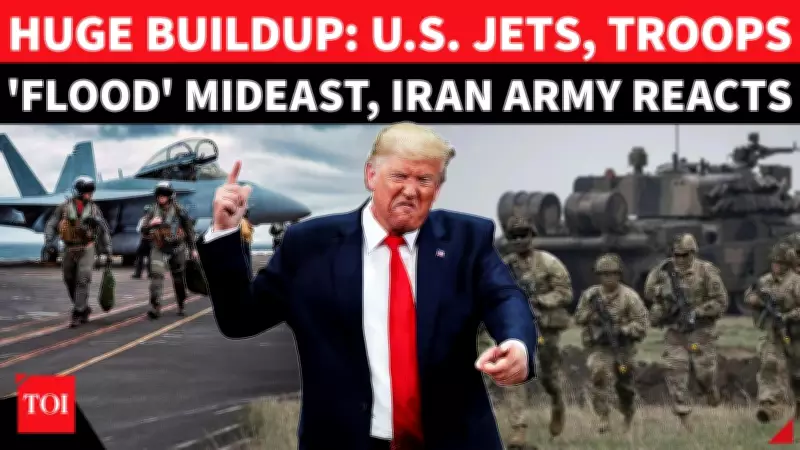
US Military Escalates Presence Near Iran After Islamabad Peace Talks Fail
In a significant escalation of tensions in the Middle East, the United States has deployed additional warplanes and approximately 1,000 troops to the region, following the collapse of high-stakes peace negotiations with Iran. The talks, which were brokered by Pakistan in Islamabad, ended without agreement, prompting a swift military response from Washington. This development underscores the deepening rift between the two nations over Iran's nuclear ambitions and regional security concerns.
Pentagon Rushes Fighter Jets and Elite Paratroopers to the Region
According to recent reports from the Pentagon, the United States has rushed multiple fighter jets and around 1,000 troops to bolster its military presence in the Middle East. In addition, nearly 2,000 paratroopers from the elite 82nd Airborne Division have been deployed for potential ground operations, signaling a readiness for heightened military engagement. This rapid deployment comes amid growing fears of a renewed conflict, as diplomatic efforts have faltered.
The decision to reinforce military assets follows the failure of negotiations in Islamabad, where US and Iranian officials attempted to reach a consensus on key issues, including nuclear non-proliferation and regional stability. The talks, which were seen as a critical opportunity to de-escalate tensions, ultimately broke down, leaving both sides at an impasse.

Vice President JD Vance Confirms Negotiation Failure, Issues Warning to Tehran
US Vice President JD Vance has publicly confirmed the collapse of the Islamabad talks, describing the outcome as "bad news" for Tehran. In a statement, Vance emphasized that Washington's core demand remains a long-term guarantee that Iran will not pursue nuclear weapons. He stressed that the United States is committed to preventing Iran from acquiring nuclear capabilities, which it views as a threat to global security.
Vance's remarks highlight the persistent challenges in US-Iran relations, with both nations holding firm to their positions. The failure of the Pakistan-brokered talks has raised concerns about the potential for military confrontation, as the United States demonstrates its willingness to use force to protect its interests in the region.
Background and Implications of the Military Buildup
The deployment of US troops and warplanes near Iran is not an isolated incident but part of a broader pattern of military posturing in the Middle East. In recent months, tensions have been fueled by incidents such as drone strikes near Baghdad Airport targeting areas close to US diplomatic convoys, and warnings from Iran about forceful responses to US actions. Additionally, reports of China boosting Iran's air defense capabilities have added to the complexity of the situation.
This military buildup also comes amid other regional developments, including threats from Israeli Prime Minister Netanyahu to bomb Iran's nuclear sites and clashes involving Hezbollah and IDF troops. The United States has issued warnings to Israel to halt strikes, indicating the interconnected nature of conflicts in the region.
The failure of the Islamabad talks and the subsequent US military deployment suggest that diplomatic avenues may be narrowing, increasing the risk of escalation. As both sides prepare for potential scenarios, the international community watches closely, hoping for a return to dialogue to avoid further instability in the Middle East.