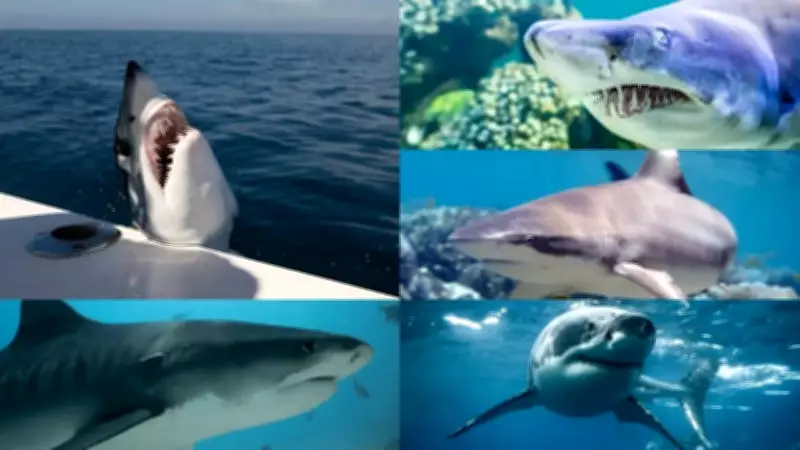
A recent shark attack that made headlines worldwide due to viral video footage has once again sparked public interest in some of the ocean's most fearsome creatures. According to reports, a woman swimming about 30 meters from the shore at Coogee Beach in Sydney was attacked by a 3 to 4 meter (10-13 ft) long shark, which bit her arms and legs. Although such incidents are rare, the viral footage and ensuing discussions have renewed curiosity about the shark species most often involved in attacks on humans. Here are seven shark species frequently associated with human encounters and why they command global attention.
Great White Shark – The Ocean's Most Fearsome Predator
The great white shark is a well-known predatory species that can grow up to 6 meters in length. As an apex predator, it naturally inhabits coastal waters. Great white sharks are frequently mentioned in reports of attacks on people, as they tend to occupy areas with high populations of swimmers and surfers. Their massive size and weight make them stand out among other shark species.
Bull Shark – The Aggressive Species in Fresh and Salt Waters
The bull shark is considered one of the most dangerous shark species. In addition to its aggression, it is unique in its ability to survive in both fresh and salt water. This allows bull sharks to be found in rivers, estuaries, and coastal waters where people spend a lot of time. Their tendency to inhabit these zones contributes to a higher level of contact with humans.

Tiger Shark – The 'Garbage Can' of the Sea
Tiger sharks are recognizable by their broad diet, which includes a wide variety of animals. They are curious and often investigate unfamiliar objects. For these reasons, tiger sharks tend to approach people out of interest. They are typically found in tropical and subtropical regions around the globe.
Oceanic Whitetip Shark – The Aggressive Open Ocean Predator
As its name suggests, the oceanic whitetip shark lives in the open ocean. These sharks rarely encounter people, but when a person falls into the water due to an accident, oceanic whitetip sharks can become quite threatening. They are aggressive enough to explore anything that might be a potential food source.
Blacktip Shark – Frequent but Usually Harmless Encounters
Blacktip sharks prefer to stay near coasts and are often found in shallow waters. Although they are considered potentially dangerous, the number of accidents caused by blacktip sharks is minimal. They are known for jumping high above the water's surface while attacking schools of fish in shallow areas.
Sand Tiger Shark – Distinguishing Features and Behavior
The sand tiger shark has a terrifying appearance due to its protruding teeth. However, this species poses little danger to humans. Despite this, sand tiger sharks are included on lists of potential threats because of their size. They live in temperate and subtropical zones and are often found in coastal waters.
Shortfin Mako Shark – The Ocean's Speediest Predator
The shortfin mako shark deserves special attention as one of the fastest shark species, capable of reaching speeds over 70 km/h. This species is not very aggressive toward humans, but it is still categorized as potentially dangerous due to its size and speed.
Understanding the Reality of Shark Attacks
In conclusion, shark attacks occur rarely compared to risks from other sources. Sharks are vital to ocean ecosystems as they help maintain balance. Conservationists recommend protecting these endangered species and increasing public awareness about sharks.