US Completes Withdrawal from World Health Organization: A Global Health Crossroads
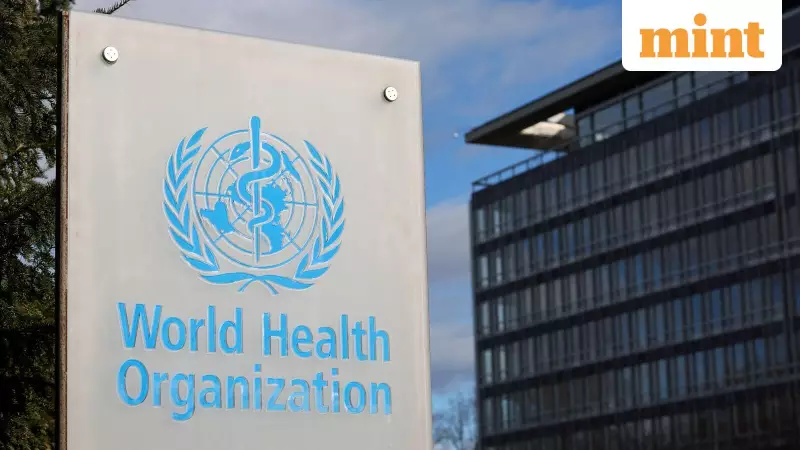
The United States has officially severed ties with the World Health Organization (WHO), marking a significant shift in global health governance. On January 22, 2026, the US government announced the completion of its withdrawal process, exactly one year after President Donald Trump signed an executive order initiating this unprecedented move.
The Withdrawal Timeline and Immediate Actions
The formal withdrawal process began on January 20, 2025, when President Trump directed government agencies to initiate the exit from WHO. This decision followed earlier attempts during his first term in 2020, which were motivated by disagreements over the organization's handling of the COVID-19 pandemic response.
Over the past year, the United States has taken several concrete steps to disengage from WHO:

- Terminated all funding to the organization
- Recalled US personnel and contractors from WHO headquarters in Geneva and global offices
- Suspended hundreds of engagements with WHO programs
- Ceased participation in WHO-sponsored committees, governance structures, and technical working groups
According to a fact sheet released by the US Department of Health and Human Services (HHS), these actions represent a complete disengagement from the global health body.
Reasons Behind the US Decision
The Trump administration cited multiple reasons for withdrawing from WHO, primarily focusing on the organization's performance during the COVID-19 pandemic. In an HHS statement, officials criticized WHO for what they called "mishandling of the Covid-19 pandemic that arose out of Wuhan, China" and failure to implement necessary reforms.
HHS Secretary Robert F. Kennedy Jr. and Secretary of State Marco Rubio jointly accused WHO of withholding "critical information that could have saved American lives" during the pandemic. The administration also raised concerns about funding disparities, noting that China contributes significantly less to WHO despite having a much larger population.
The White House executive order from January 2025 specifically highlighted: "China, with a population of 1.4 billion, has 300% of the population of the United States, yet contributes nearly 90% less to the WHO."
Financial Disputes and Unpaid Dues
A significant point of contention involves financial obligations. The United States has not paid its WHO membership fees for 2024 and 2025, leaving approximately $260 million in unpaid dues. WHO maintains that the US must fulfill these financial obligations before completing its withdrawal, while US officials dispute this interpretation.
An HHS statement emphasized the historical financial contributions: "In recent years, US assessed contributions (mandatory dues) averaged approximately $111 million annually. In addition, the United States provided voluntary contributions averaging roughly $570 million per year—amounting to billions of dollars over time."
A State Department official told Reuters that "the American people have paid more than enough," reflecting the administration's position on the financial dispute.
Impact on WHO Operations and Global Health
The loss of US funding represents a severe blow to WHO's operational capabilities. During 2022-23, the United States contributed $1.284 billion to WHO, accounting for 12-15% of the organization's total budget. This withdrawal has already plunged WHO into a financial crisis with far-reaching consequences.
WHO projections indicate significant operational challenges:
- Workforce reduction of up to 22% by mid-2026
- Elimination of 2,371 positions from the January 2025 total of 9,401 posts
- A $1.06 billion budget gap for 2026-27
WHO Director-General Tedros Adhanom Ghebreyesus described the situation as "the greatest disruption to global health financing in memory." The organization has issued guidance for countries on coping with funding cuts that are "disrupting the delivery of essential health services in many countries."

Expert Reactions and Public Health Concerns
Public health experts worldwide have expressed deep concern about the implications of US withdrawal from WHO. Tom Frieden, former director of the US Centers for Disease Control and Prevention, warned that "a weaker World Health Organization means a less safe US," emphasizing WHO's unique role in global health threat monitoring.
Michele Bratcher Goodwin and Lawrence O. Gostin, co-faculty directors of the O'Neill Institute for National and Global Health Law, stated: "This decision risks undermining decades of progress...Without [the US], the organization's ability to address global health emergencies will be significantly weakened, endangering health everywhere."
Experts highlight several specific concerns:
- Weakened Global Disease Surveillance: Reduced capacity for early detection and monitoring of emerging health threats
- Diminished Emergency Response: Slower and less coordinated responses to health crises
- Reduced Research Coordination: Fragmentation of global health research efforts
- Vaccine and Treatment Access: Potential disruptions to equitable distribution of medical resources
Long-term Implications for Global Health Governance
The US withdrawal from WHO represents more than just a funding crisis—it signals a potential restructuring of global health cooperation. The move comes at a time when international collaboration is increasingly important for addressing transnational health challenges, from pandemics to antimicrobial resistance.
Public health organizations warn that reduced coordination will leave all countries more vulnerable to health emergencies. The decision may also encourage other nations to reconsider their commitments to multilateral health organizations, potentially creating a fragmented global health landscape.
As WHO navigates this unprecedented financial and operational challenge, the international community faces critical questions about how to maintain effective global health cooperation in an increasingly polarized world. The coming years will test whether alternative funding mechanisms and partnerships can fill the void left by US withdrawal, or whether global health security will suffer permanent damage from this decision.