

Enormous Underwater River Discovered Beneath the Black Sea
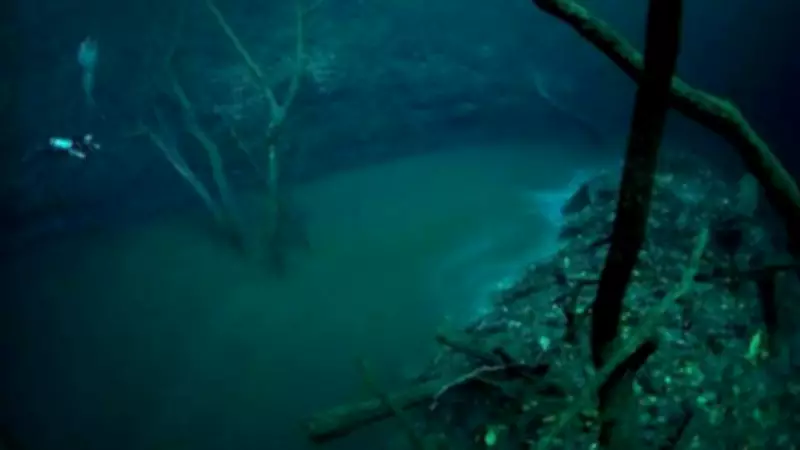
A stunning geological feature has been identified beneath the Black Sea: an enormous underwater river complete with waterfalls, rapids, and floodplains. This remarkable discovery reveals a hidden watercourse that flows through the Bosphorus Strait, fed by dense, salty Mediterranean water.
Scale and Characteristics of the Subsea River
According to Professor Daniel Parsons, a former lecturer at the University of Leeds and one of the key researchers involved, if this river existed on land, it would rank as the sixth-largest river on Earth based on its discharge of 22,000 cubic meters per second. This 'river within an ocean' is at least 115 feet deep and spans approximately 0.6 miles in width, extending about 37 miles along the continental shelf.
Advanced robotic mapping techniques, including the use of Autosub3—a 7-meter-long autonomous unmanned submarine—verified the river's distinct features. The underwater river exhibits well-defined banks, floodplains, rapids, and even undersea waterfalls, behaving precisely like a terrestrial river despite being submerged.

Formation and Mechanism
The river is driven by a dense saline current originating from the Mediterranean Sea. This high-density water spills through the Bosphorus Strait beneath the less dense and less saline Black Sea water. Instead of mixing, the dense saline water sinks to the seafloor, carving out a deep channel that functions as a significant nutrient transport system for the deep sea.
Researchers estimate that this underwater system began forming around 7,500 years ago, coinciding with the formation of the Bosphorus Strait. This event established two distinct flow layers of water, providing insights into the evolution of the Black Sea basin during periods of environmental change and rising sea levels.
Scientific Importance and Ecological Impact
The abyssal plain, often described as an oceanic 'desert' due to its nutrient-poor conditions, may be sustained by these underwater rivers. Scientists believe these channels act as 'arteries,' transporting essential oxygen and nutrients to support unique ecosystems in the deep ocean.
This discovery not only enhances our understanding of marine geology but also offers a glimpse into Earth's history. By analyzing flow patterns and sediment layers, researchers can reconstruct past environmental changes in the region.
Technical Highlights and Comparisons
- Scale: The underwater river is 350 times larger than the Thames River and 10 times more voluminous than the Rhine River.
- Discovery Method: Utilized Autosub3 for detailed mapping, as documented by Hydro International and the University of Leeds.
- Nutrient Transport: Functions as a critical highway for nutrients, potentially revitalizing deep-sea ecosystems.
This groundbreaking find underscores the complexity of oceanic systems and opens new avenues for research in marine science and geology.






