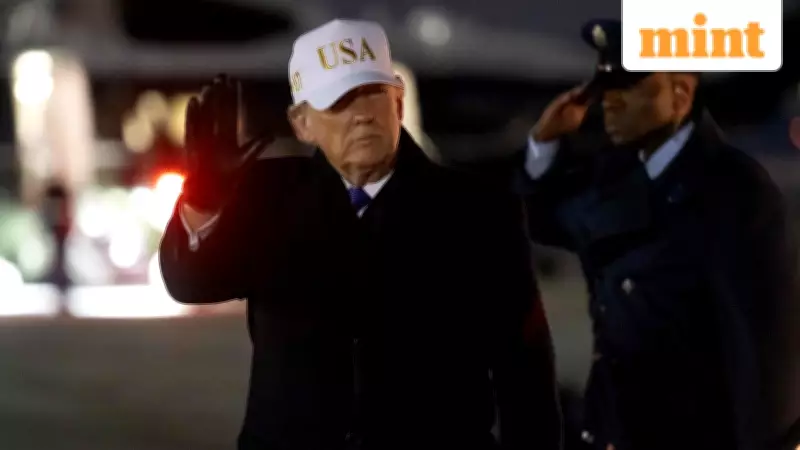
Trump's Ambiguous Iran Policy: Deal Diplomacy and Military Threats
US President Donald Trump's next strategic move regarding Iran remains shrouded in uncertainty, with the American leader simultaneously expressing hopes for a diplomatic agreement while maintaining military options as a viable alternative. This delicate balancing act unfolds against a backdrop of escalating regional tensions and significant military deployments.
Trump's Contradictory Statements on Iranian Relations
Just hours after Iran's Supreme Leader Ayatollah Ali Khamenei issued a stark warning about potential "regional war" if provoked by American forces, President Trump offered conflicting signals about his administration's intentions. While expressing optimism about reaching a negotiated settlement, the US President notably refused to eliminate the possibility of military strikes targeting Tehran.
When questioned about Khamenei's ominous warning during a Sunday press briefing, Trump dismissed the Iranian leader's rhetoric with characteristic bluntness. "Of course he [Khamenei] is going to say that," Trump remarked to assembled journalists. The President continued with a statement that captured his administration's dual-track approach: "Hopefully we'll make a deal. If we don't make a deal, then we'll find out whether or not he was right." These comments were documented by the AFP news agency.

Military Buildup and Regional Deployment
Trump's ambiguous statements coincide with substantial military mobilization in the Persian Gulf region. The United States has strategically positioned the aircraft carrier USS Abraham Lincoln along with accompanying warships within striking distance of Iranian territory. This naval deployment represents a tangible manifestation of the administration's "all options on the table" approach to Iranian relations.
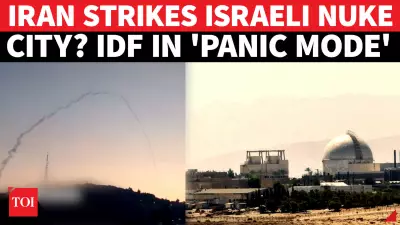
The current administration has consistently threatened intervention in Iranian affairs, citing support for protesters facing government crackdowns and demanding Tehran abandon its nuclear ambitions. These threats gained concrete expression in June 2025 when American forces conducted strikes against Iranian nuclear facilities, further complicating bilateral relations.
US-Israel Military Coordination Amid Rising Tensions
As regional tensions continue to mount, American and Israeli military leaders engaged in high-level discussions at the Pentagon over the weekend. According to Reuters reporting, US General Dan Caine, who serves as chairman of the Joint Chiefs of Staff, met with Eyal Zamir, chief of staff of the Israeli armed forces, during a Friday session at the Pentagon. While the precise agenda remains undisclosed, the timing suggests coordination regarding regional security concerns.
Israeli Defense Minister Israel Katz confirmed on Sunday that these Washington discussions had indeed taken place, with his office releasing a statement indicating that Tel Aviv had reviewed the regional situation and assessed the Israeli military's "operational readiness for any possible scenario." This military coordination between close allies underscores the seriousness with which regional powers view the escalating Iran situation.
Khamenei's Stark Warning and Domestic Crackdown
Iran's Supreme Leader delivered a forceful message on Sunday, cautioning that American aggression would trigger widespread regional conflict. "The Americans should know that if they start a war, this time it will be a regional war," Khamenei declared, while attempting to reassure Iranians that they "should not be scared" of Trump's rhetorical threats. The Associated Press quoted the Iranian leader asserting, "We are not the instigators, and we do not seek to attack any country. But the Iranian nation will deliver a firm blow to anyone who attacks or harasses it."
Khamenei also addressed the nationwide protests that have shaken Iran since late December 2025, characterizing the demonstrations as a "coup" that had been successfully "suppressed." He claimed protesters targeted "sensitive and effective centres involved in running the country," including police stations, government buildings, Revolutionary Guard facilities, financial institutions, and religious sites, even alleging Quran burnings.

Root Causes of Iranian Unrest
The protest movement that erupted across Iran in December 2025 originated from deep-seated economic grievances, primarily the catastrophic collapse of the national currency and persistent economic hardships affecting ordinary citizens. The government's response to these demonstrations has been characterized by international observers as particularly brutal.
While Iranian authorities officially acknowledge approximately 3,000 fatalities during the crackdown, independent human rights organizations estimate the death toll exceeds 5,000. More startling figures emerged from Iranian health officials speaking to TIME magazine, who suggested the actual number of deaths could approach 30,000, highlighting the severe human cost of the government's suppression efforts.
The convergence of domestic unrest, regional military posturing, and ambiguous diplomatic signals creates a volatile situation in the Middle East, with global implications extending far beyond the immediate region.