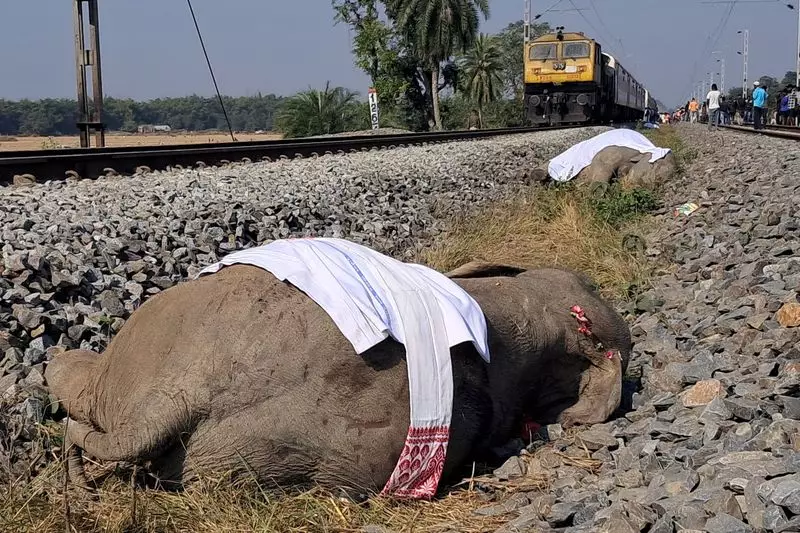
A passenger train collided with a herd of wild elephants in the early hours of Thursday in Assam, resulting in a devastating loss of wildlife and a significant rail accident. The incident, which occurred near the Jhajha-Badharpur section under the Lumding division, left seven elephants dead and caused five coaches of the train to derail.
A Tragic Collision in the Early Morning Dark
The Kanchanjunga Express, traveling from Agartala to Sealdah, struck the elephant herd at approximately 11:30 PM on Wednesday night. The location was between Badarpur and New Harangajao stations in Assam's Hailakandi district. The force of the impact was severe, leading to the immediate death of five elephants on the spot. Two more critically injured elephants succumbed to their wounds later, bringing the total fatalities to seven majestic creatures.
Simultaneously, the collision had catastrophic consequences for the train itself. Five coaches—including three general compartments and two luggage vans—jumped the tracks. Preliminary reports from railway officials indicated that the locomotive and a power car also suffered damage in the harrowing event.

Rescue Operations and Immediate Aftermath
Following the accident, a major rescue and clearance operation was launched. Railway teams, along with local authorities, worked through the night. No human fatalities were reported, which officials described as a relief amidst the tragedy. However, some passengers sustained minor injuries and were provided with immediate medical attention.
The derailed coaches were eventually righted and moved to Badarpur station, allowing restoration work on the affected track to begin. The disruption caused significant delays to train services on the route as the line was blocked for several hours. An official inquiry has been ordered to determine the exact sequence of events and circumstances that led to this tragic accident.
Broader Implications for Wildlife and Railway Safety
This incident has once again cast a glaring spotlight on the critical issue of human-wildlife conflict and the safety of elephant corridors in India. The region where the accident occurred is known for elephant movement, raising urgent questions about the measures in place to prevent such collisions. Environmentalists and wildlife experts have long advocated for stricter speed limits in identified corridors, improved signage, and the creation of safe animal passages like underpasses or overpasses.
The death of seven elephants represents a significant blow to the local elephant population. Forest department officials were present at the site to manage the situation. This tragedy underscores the ongoing challenge of balancing infrastructure development with the imperative of wildlife conservation, demanding a renewed focus on sustainable and coexistence-oriented solutions.