Forest Authorities Take Action After Tiger Killing Linked to Illegal Opium Field
In a significant development following the shocking confession in a tiger killing case, forest authorities have moved swiftly to prevent further incidents by capturing a straying radio-collared tiger from the Satpura Tiger Reserve. This action comes days after an accused admitted to poisoning and burying a rewilded tiger from Satpura in Chhindwara, fearing that the animal's collar signals would expose his illegal opium cultivation.
Capture of Straying Tiger Marks First Such Preventive Measure
On Wednesday, forest teams successfully captured another radio-collared male tiger that had strayed from the Satpura reserve, marking the first such preventive move in response to the recent killing. The tiger had been roaming for over two months in forest areas near villages within the Narmadapuram division, including the Itarsi and Sukhtawa ranges. During this period, it had preyed on cattle, raising concerns among local communities.
Field Director Rakhi Nanda emphasized that all collared tigers are now under close surveillance, with proactive steps being implemented to prevent them from entering risky zones. "We are monitoring these animals meticulously to ensure their safety and minimize conflicts," Nanda stated, highlighting the urgency of the situation.

Three-Day Rescue Operation Culminates in Successful Capture
The operation to capture the straying tiger was a coordinated effort involving multiple teams:
- Personnel from the Satpura Tiger Reserve
- Officials from the Narmadapuram forest division
- Wildlife experts specializing in tranquilization and rescue
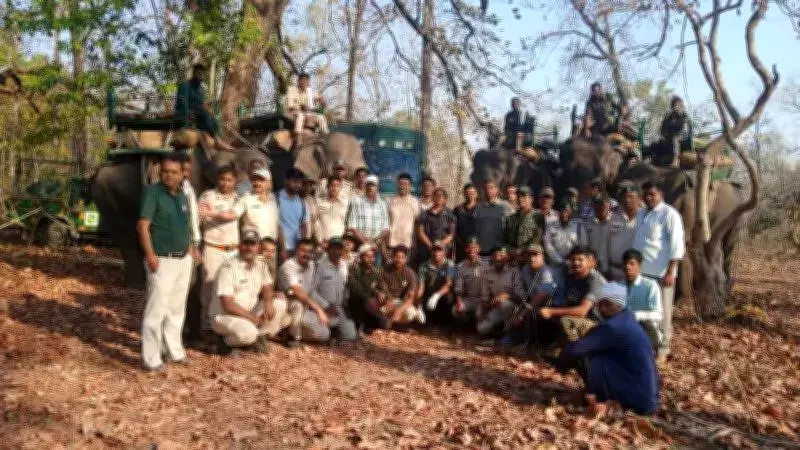
After three days of intensive tracking, the tiger was finally located on Wednesday morning near Mandikhoh. It was safely tranquilized and captured, with no injuries reported to the animal or the rescue teams. This meticulous operation underscores the authorities' commitment to balancing wildlife conservation with public safety.
The broader context of this action traces back to the chilling confession in the earlier tiger killing case, where the perpetrator cited fear of exposure of his illegal opium field as the motive. This revelation has prompted forest authorities to reassess strategies for managing collared tigers, particularly those that stray beyond protected limits. By bringing this tiger back into the reserve, officials aim to mitigate risks and protect both the endangered species and local livelihoods from potential conflicts.