Tambaram's Waterbodies Remain Severely Polluted Despite Restoration Promises
The persistent pollution of lakes across Tambaram city municipal corporation continues to alarm residents and environmental activists. Despite repeated complaints and multiple funding announcements for restoration projects, a viable solution to the sewage contamination problem remains elusive. The situation raises serious concerns about water security in the region.
Widespread Pollution Across Multiple Waterbodies
At least twenty-five waterbodies spread across the corporation's five zones remain in deplorable condition. These include small lakes in Rajakilpakkam, Nemilichery, Irumbuliyur, Agaramthen, Mudichur, and the old Perungalathur lake. Most of these lakes suffer from significant encroachment issues and have deteriorated due to the absence of sustained restoration work.
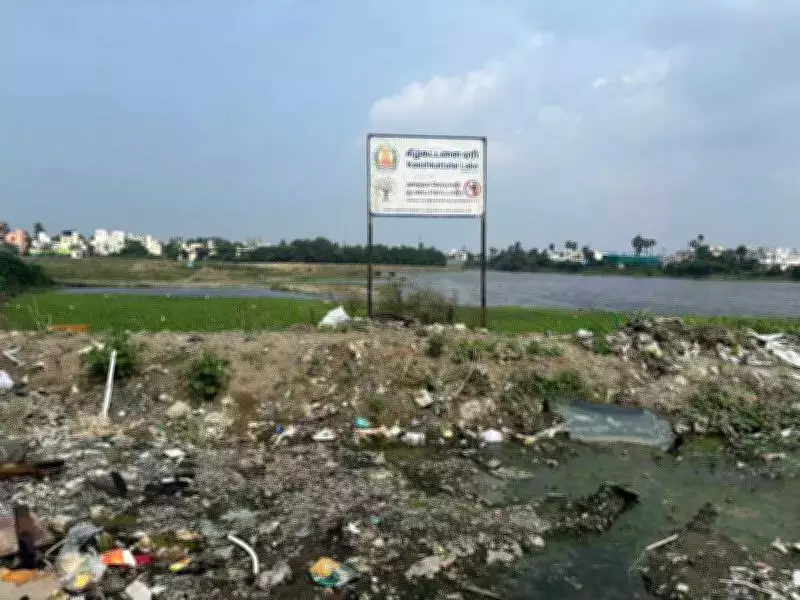
The majority of these waterbodies are choked with dense growth of water hyacinth, which serves as a clear indicator of heavy sewage inflow and severe pollution. This invasive plant species thrives in nutrient-rich polluted waters, further degrading the aquatic ecosystem and reducing water storage capacity.

Pallavaram Periya Eri: A Case Study in Neglect
The condition of Pallavaram Periya Eri, the largest lake along Radial road, has drawn particular concern from environmentalists and residents alike. Once a major freshwater source spanning approximately 120 acres, this significant waterbody has now transformed into a sewage-filled reservoir. Despite a substantial allocation of 7.2 crore rupees over the years specifically for its restoration, the lake remains largely neglected.
According to an official Tambaram corporation report, Pallavaram currently receives about 15.2 million litres per day (MLD) of water. This supply could potentially be doubled if Pallavaram Periya Eri undergoes proper restoration. However, continuing sewage inflow, large-scale encroachments, and narrowed inlet canals continue to undermine any revival efforts.
Residents Voice Growing Concerns
V Saritha, secretary of Ganesh Nagar residents' welfare association, highlighted the systemic nature of the problem. She noted that all stormwater drains in East Tambaram and along the GST road now carry sewage instead of rainwater. The sewage either leaks and spreads on roads or ultimately flows into nearby waterbodies. This affects not just the lakes along the Radial road, but also smaller lakes in the nearby regions, she explained.
Resident-activist David Manohar provided specific examples of incomplete restoration work. In early 2025, Chennai Metropolitan Development Authority (CMDA) floated a 3.4 crore rupee tender to restore Putheri Lake along the 14.3-kilometer Radial road. Only partial work was completed so far, mainly on the southern side. The northern side remains in a terrible condition. The road along this stretch, used daily by thousands of students and residents, has turned into a dumpyard for meat waste and rubbish, he reported.
Institutional Challenges and Future Concerns
A senior official from Tambaram corporation clarified that not all lakes fall under the corporation's direct restoration plan. Most waterbodies are taken up for restoration by the Water Resources Department (WRD) and CMDA. The official stated that once ongoing projects are completed, attention would shift to other lakes requiring intervention.
With Tambaram corporation expected to receive additional water from the Nemmeli desalination plant next year, residents fear there may be no clean or functional waterbodies left to store the incoming supply. This concern highlights the urgent need for coordinated action between different government departments to address the pollution crisis before it escalates into a full-blown water storage emergency.
The situation underscores the complex challenges of urban water management in rapidly developing regions, where infrastructure development often fails to keep pace with population growth and environmental pressures.