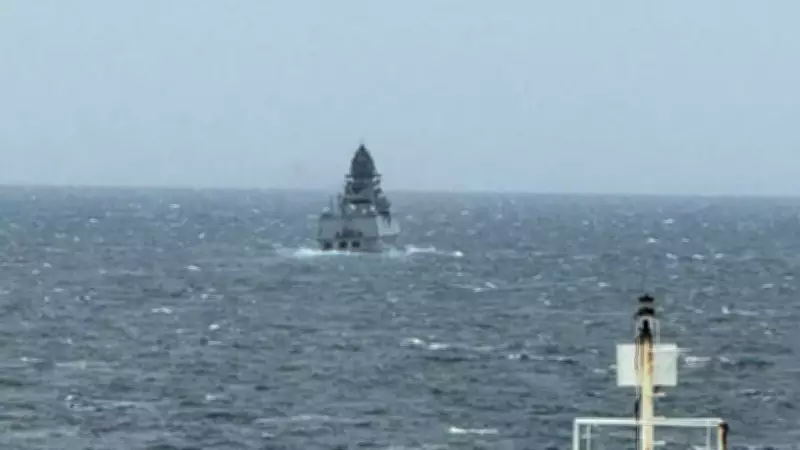
Strait of Hormuz Crisis: Will Iran Pose a Bigger Test Than Red Sea for the West?
Amid escalating tensions in the Middle East following clashes between the US, Israel, and Iran, Tehran has imposed restrictions on the Strait of Hormuz, allowing only a select few countries' ships to pass. This move raises a critical question: will this strategic waterway prove to be an even tougher challenge for Western allies than the Red Sea? The situation is intensifying as global energy supplies face unprecedented disruption.
Hormuz Blockade Sends Oil Prices Soaring
Iran's threats to the strait and attacks on nearby energy infrastructure have triggered a sharp rise in oil prices, causing the worst disruption to global oil and gas supplies in recorded history. The Strait of Hormuz is a crucial artery, handling approximately one-fifth of the world's oil and liquefied natural gas. Without its reopening, shortages could worsen, driving up costs for energy, food, and other products worldwide.
"There is no substitute for the Strait of Hormuz," emphasized Kuwait Petroleum CEO Sheikh Nawaf Saud Al-Sabah during a video call to the CERAWeek energy conference in Houston. "It is the world’s strait, under international law and practical reality." In response, UN Security Council members are negotiating resolutions to protect the strait, with nations like Bahrain advocating for authorization to use "all necessary means," including military force.

Red Sea Lessons Loom Large
Western nations attempting to secure the waterway for energy shipping confront a harsh reality. A similar operation in the Red Sea years ago, aimed at countering Yemen's Houthis, cost over $1 billion, sank four ships, and ultimately failed to keep the route safe. Shippers now largely avoid that area, which once carried 12% of global trade, opting for longer journeys around the Horn of Africa.
According to nineteen security and maritime experts who spoke to Reuters, the US and its allies face major challenges in protecting the Strait of Hormuz. Iran possesses far more advanced military capabilities than the Houthis, including missiles, cheap drones, floating mines, and easy access from its mountainous coast to the narrow waterway. "Defending convoy operations in the Strait of Hormuz is significantly more challenging than in the Red Sea," noted retired Rear Admiral Mark Montgomery, who escorted tankers through the strait during the Iran-Iraq war in 1988.
Iran’s Military Edge Makes Protection Tough
The danger zone around the Strait of Hormuz is estimated to be five times larger than the Houthis' area near the Bab el-Mandeb Strait in the Red Sea. Unlike the Houthis, Iran's Islamic Revolutionary Guard Corps (IRGC) is a professional military force with its own weapons factories and substantial funding. This makes any protection effort complex and costly.
Military experts suggest that securing the strait would require a dozen large warships, such as destroyers, supported by jets, drones, and helicopters. Overhead air cover is critical to counter flying drones and explosive-laden vessels that can blend with normal sea traffic. "A destroyer can intercept missiles but cannot simultaneously sweep mines, counter drone-boat swarms from multiple bearings, and manage GPS disruption," explained SSY analysts.
Analysts warn that the IRGC has stockpiles of missiles and drones hidden in buildings and caves along hundreds of miles of steep coastline. In some areas, drones could swarm a ship in as little as five to ten minutes. "There are ballistic missiles, drones, floating mines, and even if you were able to destroy those three capacities, there are suicide operations," said Adel Bakawan, director of the European Institute for Studies on the Middle East and North Africa.
Protecting the Strait Will Be Complex and Costly
Additional threats include sea mines and heavily armed mini-submarines, which the US did not face in the Red Sea, according to retired Royal Navy commander Tom Sharpe. "If (the Americans) lose a destroyer in this ... that changes the calculus of everything. That's 300 people," he cautioned. While US Defense Secretary Pete Hegseth stated earlier this month that there is no clear evidence Iran has mined the strait, the potential remains a significant concern.

Experts believe a combination of mine-clearing, military escorts, and air patrols could eventually reopen the strait, but it may take months to erode the IRGC threat. "You might have to do that for months before you have finally eroded the IRGC threat," said Bryan Clark, an autonomous warfare expert at the Hudson Institute. The challenge is particularly pressing for US President Donald Trump as he seeks to justify actions in Iran ahead of November midterm elections, with gasoline prices nearing $4 a gallon. Analysts note that energy prices will not fully stabilize until the strait reopens.
Trump has been noncommittal about US involvement, initially stating the Navy would escort ships when needed, then suggesting other nations take the lead. Since joint US-Israeli attacks on Iran began on February 28, most ships have been blocked from passing through the strait. In a further escalation, an Iranian lawmaker told state media last week that Iran is considering charging fees for vessels wanting to use the strait.
As the crisis deepens, the global community watches closely, aware that the outcome in the Strait of Hormuz could redefine international security and economic stability for years to come.