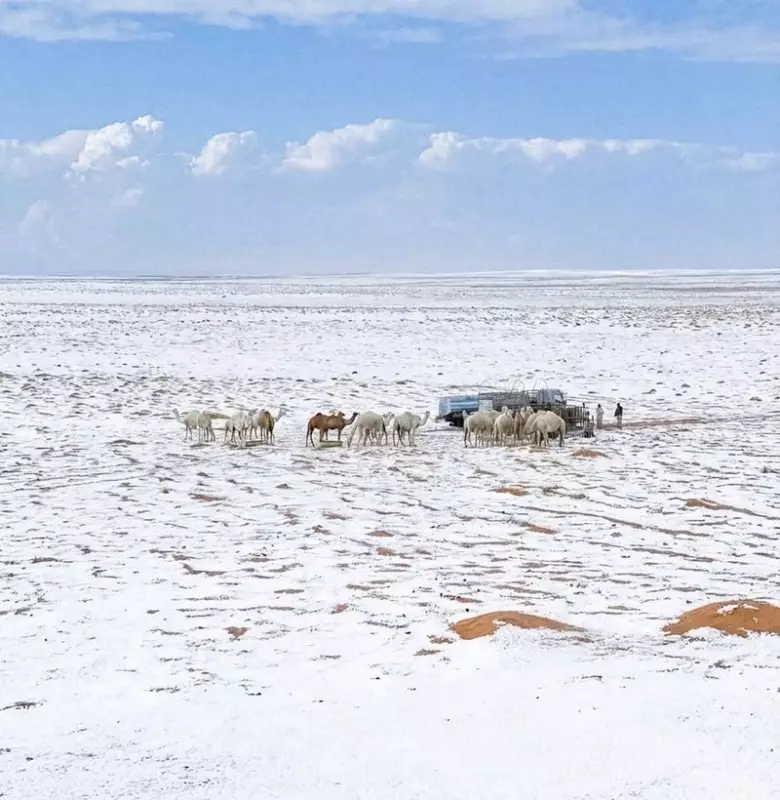
In a stunning meteorological event, parts of Saudi Arabia, a nation synonymous with vast deserts and scorching heat, have been transformed into a picturesque winter landscape. Residents of the northern Tabuk region woke up to a rare and beautiful sight: a blanket of white snow covering the arid ground. This unusual occurrence, reported on Wednesday, January 22, 2025, has captivated locals and sparked widespread discussion online.
A Winter Wonderland in the Desert Kingdom
The snowfall was concentrated in the mountainous areas near Tabuk, close to the Jordanian border. Social media platforms were quickly flooded with videos and images shared by amazed residents. The visuals showed snow-dusted palm trees, vehicles covered in a white layer, and children playing in the frosty powder—scenes more typical of Alpine Europe than the Arabian Peninsula. The cold snap responsible for this phenomenon also brought a significant drop in temperatures across the region, with some areas experiencing lows near freezing.
While fleeting snow flurries or hail have been occasionally reported in Saudi Arabia's higher elevations, a proper snowfall that settles and accumulates remains an exceptionally rare event. The nation's climate is predominantly hyper-arid, characterized by extremely high summer temperatures and mild, dry winters. This makes any form of precipitation, let alone snow, a noteworthy occurrence.

The Science Behind the Sudden Snow
Meteorologists attribute this rare desert snowfall to a specific and potent combination of atmospheric conditions. The event was driven by an intrusion of exceptionally cold polar air masses pushing southward into the Middle East. When this frigid air collided with a band of moisture, it created the perfect recipe for snow at higher altitudes.
The elevation of the Tabuk region's mountains played a crucial role. As the moist air was forced to rise over these higher terrains, it cooled rapidly, causing the water vapor to condense and freeze into ice crystals, which then fell as snow. This process, known as orographic lift, is a key factor in precipitation in mountainous areas worldwide, even in desert climates.
Broader Implications and a Changing Climate Narrative
The recent snowfall in Saudi Arabia has ignited conversations that extend beyond mere wonder. It has prompted discussions among the public and experts alike about climate patterns and variability in the region. While a single weather event cannot be directly attributed to long-term climate change, such unusual occurrences often bring the topic of global climatic shifts to the forefront.
For Saudi Arabia, a nation actively diversifying its economy under the Vision 2030 blueprint, which includes developing tourist destinations, such rare natural phenomena could even hold unexpected potential. They highlight the nation's diverse, albeit often extreme, natural beauty. However, the immediate impact was purely experiential, offering residents a brief, magical departure from the norm and a powerful reminder of nature's capacity for surprise.
Ultimately, the snow in Tabuk stands as a striking example of how dynamic and unpredictable weather systems can be. It underscores that even the most arid regions on Earth are not entirely immune to the whims of winter, given the right—and rare—atmospheric alignment.