

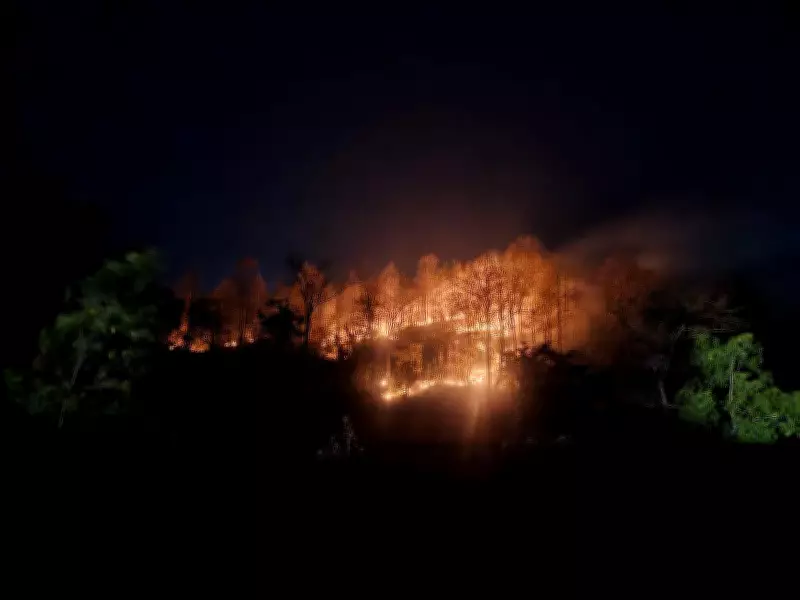
Similipal Tiger Reserve Achieves Major Success in Forest Fire Control
In a significant conservation victory, the south division of Similipal Tiger Reserve in Odisha has successfully maintained active forest fire points in the double digits for two consecutive years. This core area, known for hosting the majority of the reserve's big cats, has reported a mere 24 active fire points since the beginning of the current fire season. This marks a continuation of last year's positive trend, when the division recorded only 22 fire points.
Technological Advancements Drive Down Fire Incidents
The dramatic reduction in fire incidents is largely attributed to the strategic deployment of cutting-edge technology. Authorities have integrated drone surveillance and AI-powered cameras into their fire management protocols, enabling early detection and rapid response. This technological intervention has been pivotal in reversing a worrying trend; in 2021, the division experienced a staggering 1,068 fire points.
"We implemented a multi-faceted approach that included analyzing a decade's worth of data, mapping sensitive areas, motivating our staff, and ensuring rigorous monitoring by deputy directors and Assistant Conservators of Forests," explained Samrat Gowda, Deputy Director of the south division. "Strategic fire line creation, community involvement, awareness meetings, and the use of technology like AI cameras and drones for early fire detection have been key to our success."

Steady Decline in Fire Points Over Recent Years
Similipal Tiger Reserve, with its challenging topography of hills and high terrain, is historically prone to severe fire incidents. However, the current year has seen fires firmly under control, a situation further improved by recent rainfall over the past two days. The reserve, which witnessed its worst-ever fires in 2021, has seen a consistent decline in incidents.
The data reveals a clear downward trajectory: from 1,068 points in 2021, the number dropped to 340 in 2023, and further to 233 in 2024. This year, the reserve has bolstered its capabilities by inducting 50 mini drones across both its north and south divisions. These drones are tasked with tracking real-time fire incidents, supplementing the detection capabilities of the AI-based camera network.
The mini drones are proving to be a game-changer in fire management. "They significantly help reduce the spread of fire, as fire points can be detected and accessed quickly," emphasized Deputy Director Gowda.Overcoming Satellite Limitations with Agile Drone Response
While Similipal authorities continue to receive satellite feeds on active fire points, this method has inherent limitations. Satellites pass over a specific location only once every six hours, leading to delays in detection and response. By the time a fire is spotted via satellite and instructions are relayed to field staff, the blaze often has time to spread significantly, though teams eventually manage to contain it.
The introduction of mini drones addresses this critical gap. "The use of mini drones is efficient in terms of handling and operation," noted a senior wildlife officer. "Moreover, even lower-rung trained field personnel can swiftly react to fire points upon seeing a minor flame or smoke and douse it before it has a chance to spread."
This proactive, technology-driven strategy, combined with community engagement and improved ground management, is setting a new benchmark for forest fire control in ecologically sensitive tiger reserves across India.






