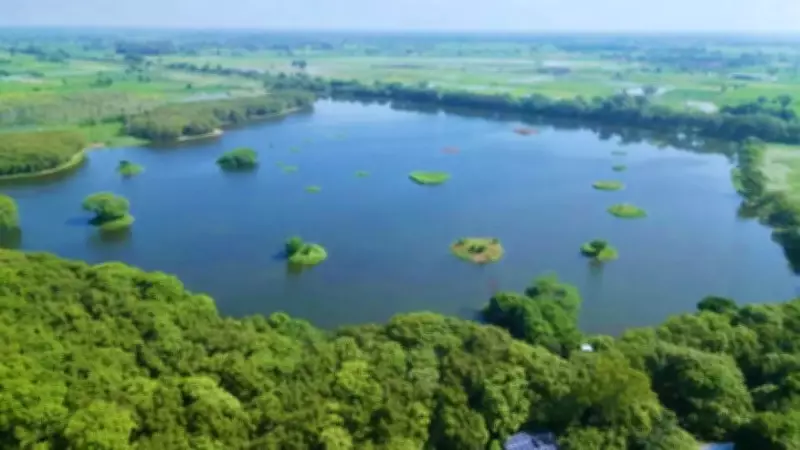
Aligarh's Shekha Jheel Bird Sanctuary Earns Prestigious Ramsar Site Designation
In a significant environmental milestone, the Shekha Jheel Bird Sanctuary located in Aligarh, Uttar Pradesh, has been officially recognized as a Ramsar site. This prestigious international designation elevates India's total count of protected wetlands under the Ramsar Convention to an impressive 99. Furthermore, this achievement boosts Uttar Pradesh's tally of such ecologically vital sites to 12, reinforcing the state's commitment to wetland conservation.
Global Context and India's Standing
Globally, there are nearly 2,594 wetlands designated under the 1971 Ramsar Convention, which provides a comprehensive framework for the conservation and sustainable use of these critical ecosystems across its 172 member countries, including India. With this latest addition, India solidifies its position as the nation with the highest number of Ramsar sites in Asia. On the world stage, India now ranks third, trailing only behind the United Kingdom with 176 sites and Mexico with 144.
Historical and Ecological Significance of Shekha Jheel
The Shekha Jheel wetland complex, which includes Shekha Jheel Lake and its surrounding deciduous forest, is a partially human-made ecosystem. Its formation dates back to the 1850s, following the construction of the Upper Ganges Canal, which flows adjacent to the site. This historical engineering project inadvertently created a haven for biodiversity that has now gained international recognition.

Union Environment Minister Bhupender Yadav emphasized the ecological importance of Shekha Jheel in a statement on Wednesday. He highlighted that the sanctuary acts as a crucial stopover on the Central Asian Flyway, providing a vital habitat for migratory birds during the winter season. Species such as the Bar-headed Goose, Painted Stork, and various ducks rely on this site for sustenance and rest. Minister Yadav also took to social media platform X to appeal to the public, encouraging people to visit and appreciate this natural treasure.
Biodiversity and Conservation Efforts
Shekha Jheel's ecological value extends beyond migratory birds. The site has been designated as an Important Bird and Biodiversity Area (IBA) by BirdLife International, underscoring its critical role in bird conservation. Additionally, it supports other water-dependent species, including three threatened turtle species: the black pond turtle, Indian flap-shelled turtle, and Ganges soft-shelled turtle. This diversity highlights the sanctuary's importance as a multifaceted ecosystem.
India's Rapid Expansion of Ramsar Sites
India's progress in wetland conservation has been remarkable over the past decade. The number of Indian wetland sites on the global Ramsar list has surged from 26 to 99 in the last 11 years. Notably, 57 of these sites have been added in just the past four years, reflecting accelerated efforts in environmental protection and recognition.
Understanding Wetlands and Their Importance
Wetlands are land areas that are covered by water, either temporarily, seasonally, or permanently. These ecosystems are indispensable for biodiversity, providing essential services such as flood control, water supply, food, fiber, and raw materials. The Ramsar Convention, adopted in 1971 in the Iranian city of Ramsar, plays a pivotal role in promoting the wise use and conservation of these vital habitats worldwide.
The designation of Shekha Jheel Bird Sanctuary as a Ramsar site not only celebrates its ecological richness but also underscores India's growing leadership in global environmental stewardship. As the country approaches the milestone of 100 Ramsar sites, this achievement marks a significant step forward in preserving natural heritage for future generations.