A severe and unrelenting cold wave has tightened its grip over the plains of North India, bringing bone-chilling temperatures and dense fog that continues to disrupt daily life. The India Meteorological Department (IMD) has forecast fresh spells of snowfall over the western Himalayan region, promising little respite from the frigid conditions in the coming days.
IMD Forecast: Snowfall for Himalayan States, Dense Fog to Continue
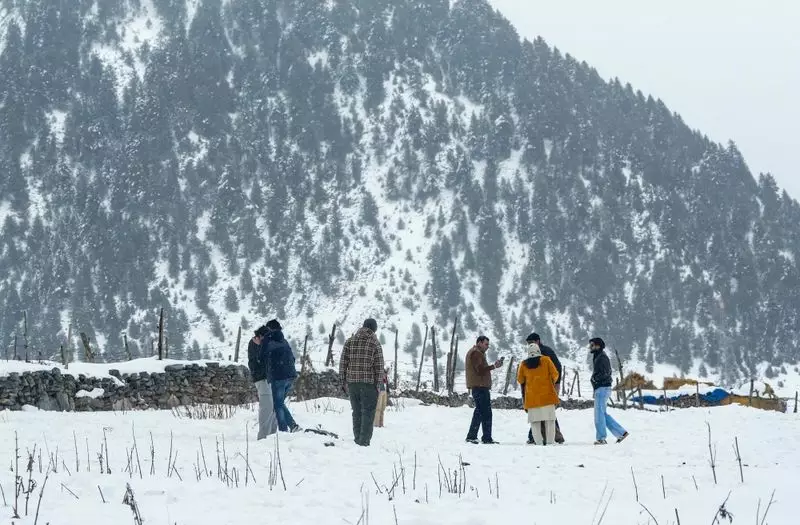
The national weather forecaster has predicted light to moderate rainfall or snowfall at many places in Jammu & Kashmir, Ladakh, Himachal Pradesh, and Uttarakhand on January 17th and 18th. This fresh bout of winter precipitation is expected to keep the minimum temperatures significantly below normal across the northern belt. For the plains, the IMD has issued a warning for dense to very dense fog in the morning hours over Punjab, Haryana, Chandigarh, Delhi, and Uttar Pradesh until January 19th, severely impacting visibility and transportation.
On Tuesday, several regions recorded punishing low temperatures. Narnaul in Haryana was the coldest in the plains at 3.2 degrees Celsius, closely followed by Hisar at 3.5 degrees. In Uttar Pradesh, Muzaffarnagar shivered at 4.2 degrees, while the national capital, Delhi, recorded a minimum of 6.4 degrees Celsius at the Safdarjung observatory. The hill stations, already in the deep freeze, witnessed temperatures plummeting further. Keylong in Himachal Pradesh recorded a low of minus 11.5 degrees Celsius, while the famous tourist destination of Manali was at minus 2.4 degrees.

Travel Chaos and Health Warnings Amidst Freezing Conditions
The persistent fog and cold have led to significant travel disruptions, particularly in road and rail transport. Flight operations have also faced delays and cancellations due to poor visibility. Authorities have advised citizens, especially the elderly and children, to take necessary precautions against the cold wave. The harsh weather conditions pose serious health risks, including hypothermia and respiratory issues, prompting advisories to avoid early morning and late evening exposure.
The IMD's forecast indicates that the cold wave conditions are likely to persist over Punjab, Haryana, and north Rajasthan. Isolated pockets in Uttar Pradesh are also expected to experience cold wave to severe cold wave conditions. The weather office has stated that no significant change in minimum temperatures is likely over most parts of Northwest India during the next 24 hours, after which a gradual rise of about 2 degrees Celsius is expected.
A Look at the Broader Weather Pattern
This intense cold spell is part of a larger winter pattern affecting the northern region. The western disturbances influencing the Himalayan region are responsible for the predicted snowfall, which, while adding to the scenic beauty, also intensifies the cold wave conditions in the adjoining plains. The lack of strong sunlight due to foggy conditions further exacerbates the feeling of cold, making it difficult for the daytime temperatures to rise significantly.
Residents across the affected states are bundling up, with night shelters and relief measures being activated by local administrations to protect the homeless population. The situation underscores the severe impact of winter weather on a region where infrastructure and daily routines are heavily tested by such annual climatic extremes.