Podcaster Raises Critical Timing Questions in Tyler Robinson Charlie Kirk Murder Case
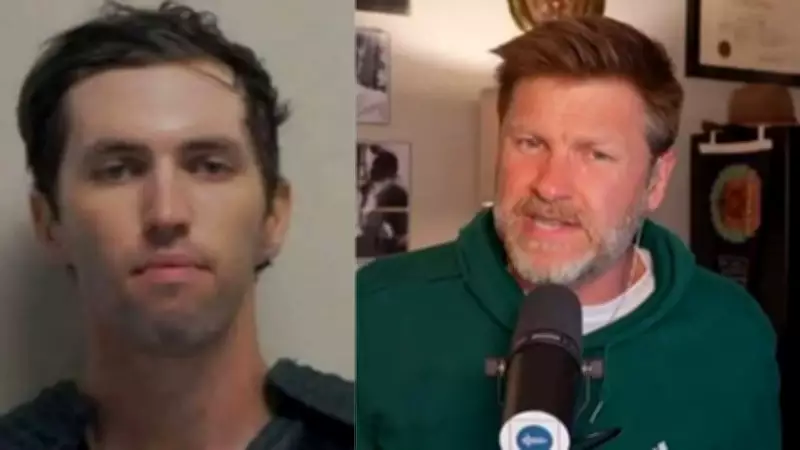
The name Tyler Robinson has resurfaced in public discourse, this time due to a potentially significant timing discrepancy that challenges the official narrative in the Charlie Kirk murder investigation. Podcaster Baron Coleman has brought forward claims suggesting inconsistencies in the established timeline, specifically regarding when Robinson was taken into police custody versus when a crucial Discord message allegedly confessing to the crime was sent.
Conflicting Timelines: Police Custody Versus Discord Message
According to Baron Coleman's analysis of court documents, Tyler Robinson was being questioned by authorities at 6:25 PM on September 11. However, the Discord message attributed to Robinson, where he allegedly admitted to the killing, was timestamped at 8:57 PM on the same day. This nearly two-and-a-half-hour gap raises a fundamental question: How could someone in police custody send such a message?
The message in question, sent from the username "zealous_monkey_55095," read: "Hey guys, I have bad news for you all. It was me at UVU yesterday. I'm sorry for all of this. I'm surrendering through a sherifi friend in a few moments. Thanks for all the good times and laughs; you've all been so amazing. Thank you all for everything."

Initial reports from major media outlets like BBC and The Washington Post had indicated this message preceded Robinson's arrest. Coleman's findings directly contradict this sequence, suggesting Robinson was already in custody when the message appeared.
Growing Scrutiny and Official Responses
Coleman's claims have gained substantial traction online, prompting renewed examination of the case details. The central issue revolves around whether Tyler Robinson actually sent the Discord message himself, or if alternative explanations exist for its origin and timing.
The Washington Post originally broke the story about the Discord messages when the case first emerged, with officials at that time stating the confession came before arrest. Coleman maintains court records tell a different story entirely.
Even federal authorities have shown interest in the Discord aspect of this case. FBI Director Kash Patel previously indicated investigators wanted to question members of the Discord group to better understand events. Meanwhile, Discord conducted its own internal review, with a company spokesperson telling CBS News they found "no evidence that the suspect planned this incident or promoted violence on Discord."
Political Commentator Candace Owens Backs Coleman's Claims
Soon after Baron Coleman presented his findings, prominent commentator Candace Owens publicly endorsed his claims and questioned the official version of events. Owens stated her team had reported similar information in a September 19th episode and included it in their timeline.
"Tyler Robinson was in police custody before 7pm. I somehow completely missed the subsequent court filing, which confirmed this," Owens wrote on social media platform X.
Owens made additional strong assertions, claiming authorities were not truthful about what Tyler Robinson was wearing when he arrived at the police station. "The time and the outfit were massive lies from Governor Cox's press conference," she added. Her statements quickly went viral, with many online users expressing agreement and skepticism toward the official account.
Official Stance and Legal Proceedings
Despite these challenges to the timeline, law enforcement officials have maintained their position. Authorities have stated that when Tyler Robinson's friends asked him if he had killed Charlie Kirk, he did not deny the allegation.
Utah Governor Spencer Cox has confirmed the state plans to seek the death penalty in this case. Tyler Robinson currently faces multiple serious charges including:
- Aggravated murder
- Obstruction of justice
- Firearm-related offenses
His preliminary hearings are scheduled for May 18, 19, and 21, 2026, where these timing discrepancies may receive further legal scrutiny.

The emerging questions about the Discord confession timing have injected new complexity into an already high-profile case, highlighting how digital evidence timelines can become critical points of contention in modern criminal investigations.