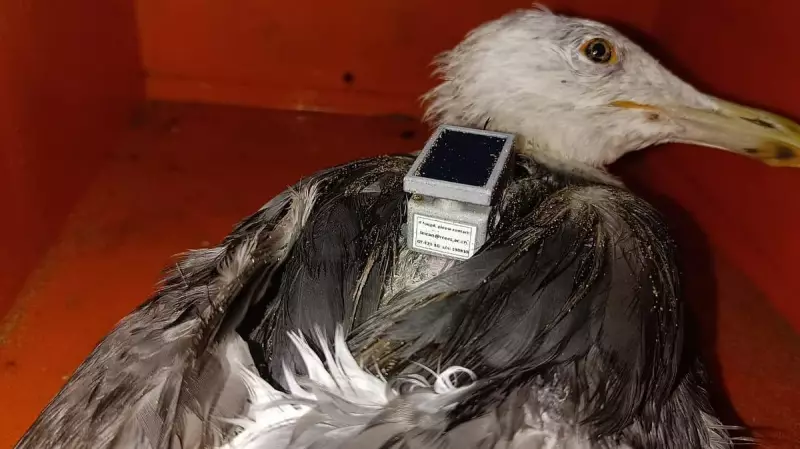
A remarkable avian odyssey has come to light on the shores of Karnataka, revealing a journey of epic proportions. A seagull, originally ringed in a distant land, was discovered on the Karwar seashore after traversing an astonishing distance.
A Transcontinental Voyage Uncovered
The bird, identified as a Black-headed Gull (Chroicocephalus ridibundus), was found by a local resident, Ganesh Shastri, near the Sadashivgad fort area in Karwar. The discovery was made on January 28, 2025. What made this sighting extraordinary was a small metal ring attached to the bird's leg, which served as a passport revealing its incredible history.
Upon reporting the find to forest officials and experts, the ring's code was deciphered. It told a story of a journey spanning continents. The gull had been ringed much earlier, on April 27, 2024, at a place called Chany, located in the Novosibirsk region of Russia. This single piece of data transformed an ordinary bird sighting into a testament of endurance and survival.

Mapping the 12,000-Kilometer Flight Path
The distance between the ringing location in Russia and the discovery point in Karwar is a staggering approximately 12,000 kilometers. The bird covered this immense distance over a period of nine months. Ornithologists believe the gull followed a classic migration route, likely flying southwards from Siberia to escape the harsh winter, ultimately finding refuge on India's warmer western coastline.
This particular species, the Black-headed Gull, is known for its long-distance migratory patterns. However, a documented journey of this length to the Karnataka coast is a significant ornithological record. The event highlights the critical importance of international cooperation in bird ringing and wildlife tracking.
Significance for Wildlife Conservation and Research
The discovery has generated excitement among bird watchers and conservationists in Karnataka and beyond. According to experts, such findings are invaluable. They provide concrete data on:
- Migration routes and patterns of bird species.
- Flight endurance and survival rates.
- The health of ecosystems and flyways across international borders.
The successful identification was made possible because the ring number EA 109460 was reported to the proper authorities, who then coordinated with the international ringing database. This process underscores how citizen sightings can contribute to global scientific knowledge. The gull, after its record-setting journey, was released back into its natural habitat on the Karwar coast, free to continue its life.
This incident serves as a powerful reminder of the interconnectedness of our planet's ecosystems. A bird ringed in the vast wetlands of Siberia finds its way to a beach in Karnataka, linking two distant regions through the miracle of migration. It also emphasizes the need to protect coastal and wetland habitats in India, which serve as crucial wintering grounds for countless migratory species from across the globe.