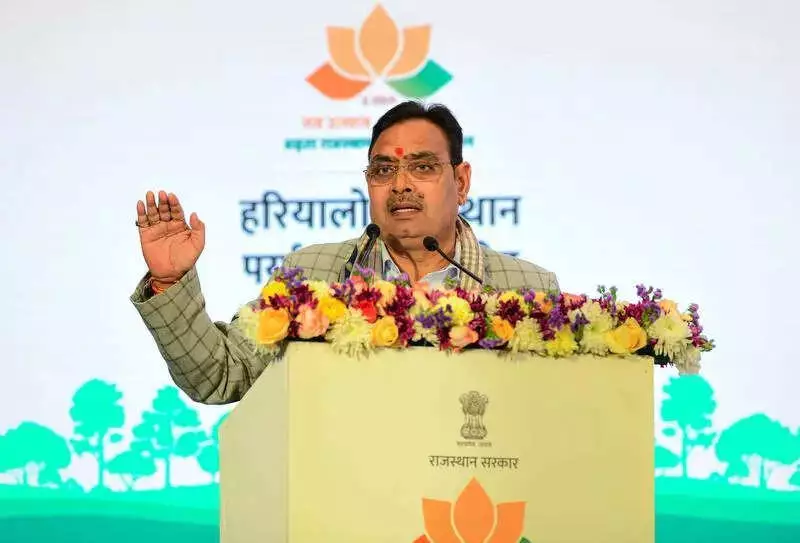
In a significant push towards sustainable development, Rajasthan Chief Minister Bhajan Lal Sharma unveiled the state's ambitious Circular Economy Incentive Scheme, 2025. Announced on Thursday, the policy is designed to revolutionize waste management and enhance resource efficiency across the desert state.
A New Model for Growth and Sustainability
Speaking at the Hariyalo Rajasthan Environment Conclave in Jaipur, CM Sharma positioned the scheme as a cornerstone of Rajasthan's environmental strategy. He emphasized the state's firm commitment to climate action, detailing a holistic approach that integrates various initiatives. A key highlight was the merging of the Vande Ganga water conservation campaign with traditional methods of reviving water bodies, rainwater harvesting, and keeping reservoirs clean.
Sharma pointed to the success of the 'Karmabhoomi to Matrubhoomi' initiative, which mobilized the Rajasthani diaspora. This effort led to the construction of over 14,000 groundwater harvesting structures, significantly bolstering water security. Furthermore, under the flagship Hariyalo Rajasthan campaign, the state has seen the planting of approximately 20 crore saplings in the last two years, marking a massive greening effort.

From Landfills to Resource Hubs: The Circular Vision
An official government circular explained that the circular economy model presents a vital alternative to the traditional linear 'take-make-dispose' system. It focuses on the efficient reuse of materials and energy, creating a closed-loop system. Officials underscored Rajasthan's immense potential to convert waste into energy and other valuable products, thereby addressing a critical environmental challenge.
"At present, millions of tonnes of municipal solid waste, e-waste, and industrial waste are disposed of at landfill sites, creating environmental concerns. With appropriate technological innovations, these waste streams can be transformed into valuable products," a senior official stated. The policy's core principles are waste avoidance, reduction, and reuse.
Objectives and Economic Opportunities
The scheme aims to incentivize businesses, industries, and startups to minimize waste, maximize resource use, and adopt eco-friendly practices. Its broad objectives include:
- Promoting circular economy practices across all industrial sectors.
- Encouraging research and development in material recovery, recycling, up-cycling, and sustainable resource management.
- Supporting studies on product repair, refurbishment, and the reuse of raw materials.
The policy also seeks to create new economic avenues through green innovation, sustainable product design, and packaging solutions. A specific focus is on developing cost-effective alternatives to banned single-use plastic items. The government stressed the need for collaborative research involving industry, startups, academia, and government agencies to build a strong circular economy ecosystem, with the goal of positioning Rajasthan as a leading hub for circular economy research and innovation.
Broader Climate Action and Clean Energy Leadership
Alongside the circular economy scheme, Chief Minister Sharma announced the implementation of a comprehensive Climate Action Plan with a target year of 2030. He also revealed plans to establish a Centre of Excellence dedicated to promoting clean technologies.
Highlighting Rajasthan's strides in renewable energy, Sharma noted that the state is the national leader in solar power generation with an installed capacity of 22,860 MW. Additionally, under the PM-KUSUM scheme, 2,272 MW of solar capacity has been installed to provide daytime power to farmers in 22 districts, reducing their reliance on coal-based electricity.
A senior forest department official acknowledged that the Circular Economy Incentive Scheme, which was introduced on World Environment Day (June 5), initially faced challenges in gaining momentum. However, concerted efforts are now underway to raise awareness and educate all stakeholders about its long-term benefits and economic potential.