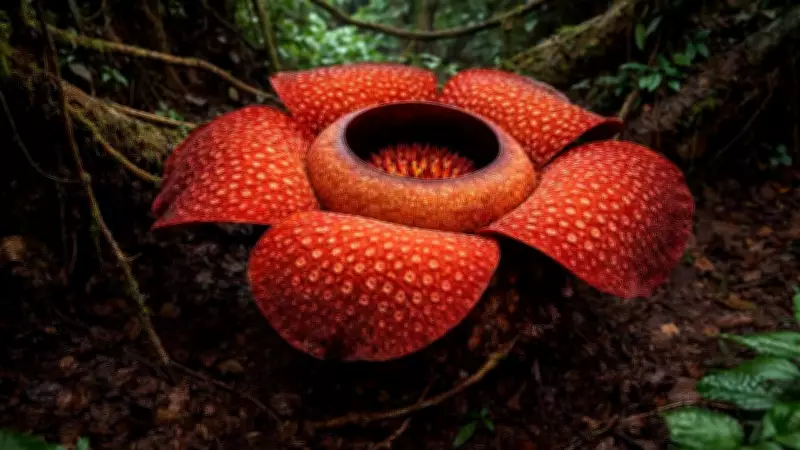
Rafflesia Arnoldii: The World's Largest Single Flower
Deep within the lush, humid rainforests of Southeast Asia thrives one of the most extraordinary botanical specimens ever discovered. The Rafflesia Arnoldii holds the distinguished title of producing the largest single flower found anywhere on our planet. This remarkable bloom can achieve diameters approaching one full meter and may weigh as much as 11 kilograms, presenting a truly monumental sight against the dark forest floor.
A Singular Botanical Marvel
What makes the Rafflesia Arnoldii particularly unusual is its solitary nature. While many plants produce inflorescences—clusters of multiple small flowers—this species generates a single, massive flower. Its thick, leather-like petals sprawl flat on the ground, displaying a deep, rich maroon or red hue adorned with distinctive wart-like markings. The sudden emergence of this fantastical bloom, which persists for a mere three to five days, makes encountering one in the wild a rare and fleeting privilege for botanists and explorers alike.
The flower's immense size is only the beginning of its peculiarities. Its entire life cycle and method of survival set it apart from virtually all other plant life on Earth, marking it as a unique subject of scientific fascination.

The Parasitic Existence of a Floral Giant
One of the most captivating aspects of Rafflesia Arnoldii is its parasitic lifestyle. Unlike typical plants, it possesses no leaves, stems, or roots of its own. Instead, it develops entirely within the tissues of a specific rainforest vine known as Tetrastigma, a member of the grape family.
Scientists classify Rafflesia Arnoldii as a holoparasitic plant, meaning it is completely dependent on its host for water and nutrients. Thread-like structures grow slowly inside the vine, absorbing sustenance. For many months or even years, there is no visible sign of the plant's presence. Only when it prepares to flower does a large bud, which can measure up to 30 centimeters across, begin to protrude from the vine near the ground.
The Corpse Flower's Foul Perfume
When the bud finally unfurls, it reveals the enormous flower, marking the start of its brief lifespan. During this short window, the bloom emits a powerful odor reminiscent of rotting flesh, earning it the macabre nickname "corpse flower."
While this scent is repulsive to humans, it is a critical survival mechanism. The stench attracts flies and other insects that typically feed on carrion. These insects enter the flower, inadvertently transferring pollen between male and female blooms, facilitating reproduction. The dim lighting of the rainforest floor and the relative scarcity of such pollinators add to the plant's reproductive challenges, as successful pollination requires nearby male and female flowers to bloom simultaneously.
Habitat and Conservation Challenges
The primary natural habitats for Rafflesia Arnoldii are the dense rainforests of Sumatra and Borneo. These ecosystems provide the perfect humid, shaded, and consistently moist conditions necessary for its growth. The flowers emerge directly from the forest floor near the roots of the host vine, a growth habit that continues to puzzle scientists.
Despite its global fame, the existence of Rafflesia Arnoldii is precarious. It relies not only on a healthy rainforest ecosystem but specifically on the presence of its Tetrastigma host vine. The forests it calls home face significant threats from deforestation, agricultural expansion, and increasing tourism. In Indonesia, where the flower is celebrated as a national symbol, its conservation is of particular cultural importance.
The Rafflesia Arnoldii is more than a mere curiosity; it is a powerful emblem of the incredible biodiversity and fragile uniqueness inherent to the world's rainforest ecosystems, reminding us of the urgent need for their protection.