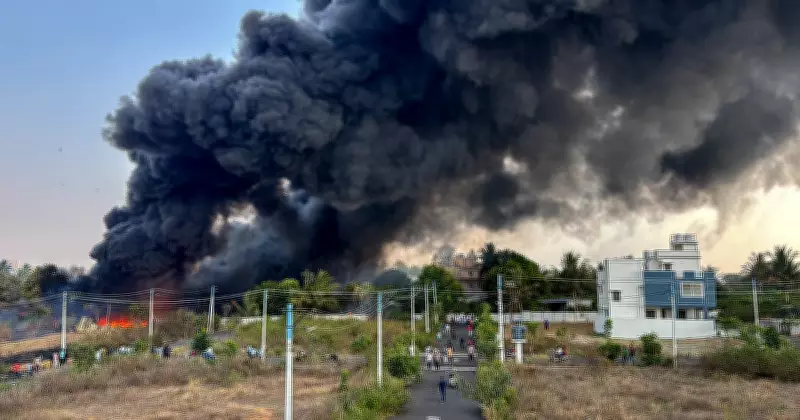
A recent plastic waste fire in Rampura, northeast Bengaluru, released toxic fumes into the air, with residents blaming weak regulatory enforcement for recurring incidents. A 'factory' with no signage or name was identified by residents as the culprit, highlighting the gap between official waste management claims and ground realities.
Recurring Hazard
The incident, which occurred on 2 May 2026, saw thick black smoke enveloping the area as plastic waste was set ablaze. Residents reported that such fires have become a frequent occurrence, with the lack of proper waste management infrastructure and oversight allowing illegal burning to persist. Despite government initiatives to manage plastic waste, the ground reality suggests that much of it is being burned in open spaces, releasing harmful pollutants.
Health and Environmental Impact
The toxic fumes from burning plastic contain carcinogens and particulate matter that pose serious health risks, including respiratory issues and long-term diseases. Environmental activists have called for stricter enforcement of waste disposal laws and the establishment of proper recycling facilities. The incident has reignited debates about the effectiveness of Bengaluru's waste management system, which has been criticized for being inadequate despite official claims of progress.

Local authorities have promised an investigation, but residents remain skeptical, citing previous inaction. The lack of signage on the factory involved suggests a pattern of unregulated waste handling, raising questions about how such operations continue to function without oversight.
Need for Systemic Change
Experts argue that addressing the plastic waste crisis requires a multi-pronged approach: stricter penalties for illegal burning, investment in recycling infrastructure, and community engagement in waste segregation. Without these measures, incidents like the Rampura fire will likely continue, endangering public health and the environment.