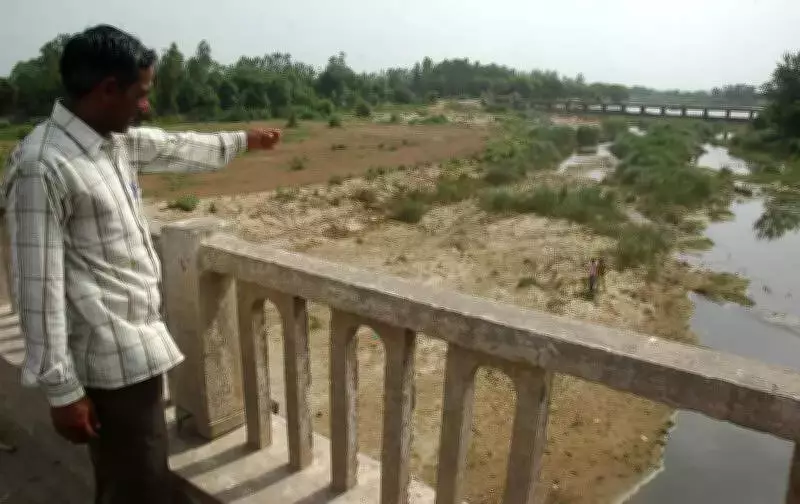
NGT Directs Himachal Pradesh to Curb Industrial Pollution Flowing into Haryana
The National Green Tribunal (NGT) has issued a stringent order to the Himachal Pradesh government, mandating an immediate halt to the outflow of effluents from the Kala Amb industrial area in Sirmaur district into neighboring districts of Haryana. This directive aims to address severe water pollution in the Markanda river, a tributary of the Ghaggar river, which has been contaminated by domestic and industrial waste.
Judicial Mandate for Environmental Remediation
In a recent ruling, Justice Arun Kumar Tyagi of the NGT has directed the Himachal Pradesh chief secretary to submit a comprehensive action plan. This plan must outline strategies for the diversion or treatment of approximately 11.62 million litres daily (MLD) of effluents that currently enter Haryana through the Markanda river and Jatton Walla Nallah. Additionally, the Punjab government has been ordered to systematically monitor the quality of the Tangri river, another tributary of the Ghaggar, to identify and control discharge points contributing to pollution.
Root Causes of Pollution Identified in HSPCB Report
The NGT's order follows a detailed report submitted by the Haryana State Pollution Control Board (HSPCB) in January 2026, which investigated pollution in the Markanda river. According to the report, the primary source of contamination is Jatton Walla Nallah, a rivulet originating from Rampur Jattan village in the Kala Amb area of Sirmaur district, Himachal Pradesh. This nallah carries both domestic and industrial effluents from Kala Amb, significantly increasing the biochemical oxygen demand (BOD) levels in the Markanda river upon merging.

Key findings from the HSPCB report include:
- Samples collected from 27 drains in Ambala, Kurukshetra, and Panchkula districts showed alarming BOD levels.
- At the entry point of the Markanda river into Haryana, the BOD was recorded at 16 milligrams per litre (mg/l).
- This level surged to 18 mg/l at the confluence with Jatton Walla Nallah, which itself had a BOD of 134 mg/l.
- According to the Central Pollution Control Board (CPCB), water with a BOD above 3 mg/l is considered polluted, and levels exceeding 30 mg/l are hazardous.
- Further downstream in Kurukshetra district, the BOD was observed at 25 mg/l, confirming ongoing pollution.
Historical Context and Public Health Concerns
The issue traces back to a letter petition filed in 2022 by Dharamvir, a resident of Naraingarh in Ambala district, who sought NGT intervention. The petition highlighted that industrial units in Kala Amb have been discharging wastewater into the Markanda river, which flows for about 24 km in Himachal Pradesh and extends another 125 km in Haryana. Regarded as a holy river, its pollution has not only degraded water quality but also caused serious health issues among villagers and cattle in downstream areas.
The NGT's proactive measures underscore a critical step towards safeguarding river ecosystems and public health in the region, emphasizing the need for inter-state cooperation in environmental management.