From Forcible Sealing to Scientific Revival: NGT Acts to Save Betwa River in Madhya Pradesh
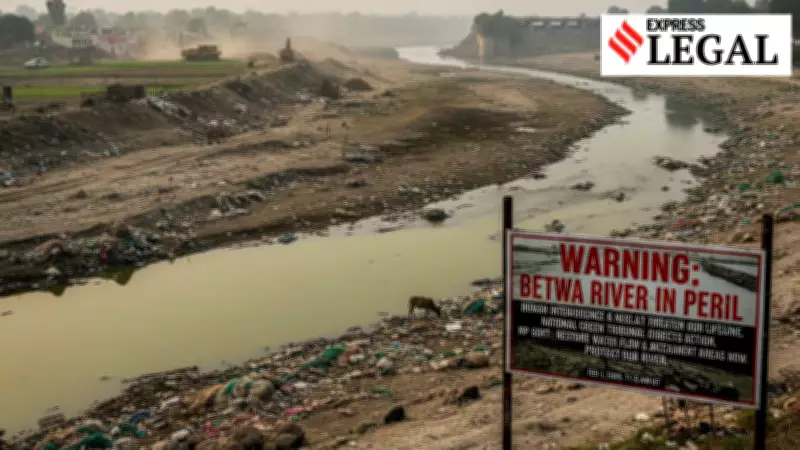
The National Green Tribunal has taken decisive action to address the severe ecological threats facing the Betwa River in Madhya Pradesh, directing the state government to implement a scientifically designed, district-wise action plan for restoration. This intervention comes in response to alarming findings of human interference at the river's origin, including forcible sealing and extensive environmental degradation.
NGT's Scientific Mandate for River Revival
An NGT bench comprising Justice Sheo Kumar Singh and Expert Member Sudhir Kumar Chaturvedi heard a plea seeking revival of the Betwa River and its water resources, emphasizing that the issue must be handled with scientific precision. "Revival of water flow in Betwa river is the main issue which is to be handled in the most scientific manner for the very survival of the river," the tribunal observed during proceedings on January 28.
The tribunal warned that sustained human interference and ecological neglect have created a serious threat to the river's existence, necessitating immediate and systematic intervention.

Comprehensive Action Plan Requirements
The NGT has outlined specific requirements for the restoration effort:
- District-wise action plans for all catchment areas of the Betwa River across various districts
- Intensive vegetative measures and soil conservation works to improve surface and sub-surface water flow
- Immediate intervention at the river's origin in Jhiri village, despite its location within the protected Ratapani Tiger Reserve
- Separate action plan for plantation works in areas devoid of vegetation
Scientific Conservation Methodology
The tribunal emphasized specific scientific approaches for effective restoration:
- Mixed plantations featuring native species across various canopy levels, including top canopy, middle canopy, herbs, shrubs, and grasses
- Soil and moisture conservation works including continuous contour trenches, scattered contour trenches, loose boulder contour stone dykes, loose boulder check dams, gully plugging, and percolation tanks
- Wetland improvement works and removal of blockages in catchment area drains
- Phased implementation over three years in highly sensitive priority areas, considering topographical, edaphic, and biotic factors
Implementation Framework and Timeline
The NGT has established a clear implementation structure with specific deadlines:
The forest department will serve as the nodal department for coordinating the restoration efforts. The principal secretary of environment and forest has been directed to ensure action plans are prepared within one month, with particular emphasis on treating the catchment area at Jhiri village this year itself.
Key implementation milestones include:
- Completion of necessary advance works for plantation and soil conservation before monsoon
- Plantation to be completed within 15 days after monsoon begins under direct supervision of deputy conservators of forests
- Treatment of catchment areas in all Phase-I districts to be completed before the end of this monsoon
- Remaining works to be completed during 2027 and 2028 in a phased manner
- Regular monitoring by chief conservators of forests for effective implementation
- Recording and monitoring of water flow changes after monsoon for evaluation
The principal secretary has been directed to submit a compliance report before the next hearing date on April 15.
Background: Environmental Petition and Committee Findings
The NGT's directions came while hearing a plea filed by environmentalist Rahul Sharma against the state of Madhya Pradesh. The petition raised serious concerns about obstruction of the Betwa River's natural origin at Jhiri village in Raisen district, where unchecked construction activity, encroachments, and tree felling were alleged to have disrupted the river's perennial flow.

In response to these allegations, the NGT constituted a joint committee comprising representatives of the Central Pollution Control Board, the district collector of Raisen, and the Madhya Pradesh Pollution Control Board to conduct a site inspection and submit a factual report.
Alarming Committee Findings
The committee's report painted a disturbing picture of ecological damage at the river's source:
- The natural origin point of the Betwa River, which had flowed uninterrupted for centuries, had been forcibly sealed using soil, debris, and concrete by local influential individuals
- This resulted in complete blockage of natural water flow
- Large-scale felling of trees in the vicinity of the origin
- Severe impact on groundwater recharge and increased soil erosion
- Clear violations of the Water (Prevention and Control of Pollution) Act, 1974, the Environment (Protection) Act, 1986, and the Forest Conservation Act, 1980
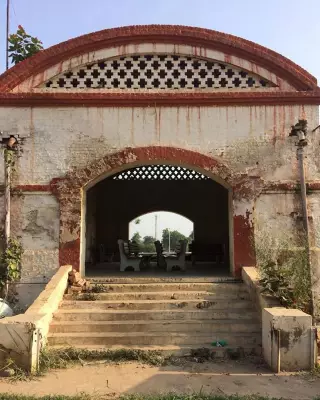
- Encroachments in the form of concrete temples, platforms built over natural water bodies, and temporary residential structures
The committee warned that continued human presence at the origin site posed a serious risk of irreversible damage to the river system, highlighting the urgent need for the scientific intervention now mandated by the NGT.