New START Treaty Ends: A New Nuclear Arms Race Looms Between US and Russia
The expiration of the New START Treaty on February 5, 2026, marks a pivotal moment in international relations, as the last bilateral nuclear arms control agreement between the United States and Russia comes to an end. This development raises profound concerns about the potential erosion of restraint among nuclear-armed states and the specter of a renewed arms race. For over five decades, these two global powers have engaged in a series of stop-start agreements aimed at limiting their strategic arsenals, but the lapse of New START leaves the world without binding constraints on the world's largest nuclear stockpiles for the first time in more than half a century.
A Grave Moment for Global Peace
UN Secretary-General Antonio Guterres has described this event as a "grave moment" for international peace and security. In a statement, he emphasized that the absence of any binding limits on the strategic nuclear arsenals of the US and Russia poses significant risks to global stability. This sentiment underscores the critical role that arms control treaties have played in maintaining a fragile balance during periods of geopolitical tension.
Historical Context: From SALT to START
The history of US-Russia arms control dates back to the Cold War era, beginning with the Strategic Arms Limitation Talks (SALT) in the late 1960s. Key agreements include:

- SALT I (1972): This led to the Anti-Ballistic Missile Treaty and an interim agreement limiting intercontinental ballistic missiles (ICBMs).
- SALT II (1979): Although signed, it was never ratified due to political tensions, including the Soviet invasion of Afghanistan.
- START I (1991): Following the Cold War, this treaty mandated reductions in deployed strategic arsenals and warheads, with verification through inspections.
- START II (1993): Aimed at further reductions, but it never came into force after US withdrawal from the ABM Treaty in 2002.
- New START (2011): The most recent pact, extended in 2021, limited warheads to 1,550 and delivery vehicles to 800, with inspection mechanisms.
These agreements have been instrumental in curbing the arms race, but their intermittent nature highlights the challenges of sustained diplomatic engagement.
Implications of the Expiry
With the New START Treaty now expired, legal limits on the number of nuclear warheads and delivery systems are no longer in place. Current estimates suggest the US possesses around 5,277 warheads, while Russia has approximately 5,449. This removal of constraints could lead to:
- Increased Nuclear Buildup: Both nations may ramp up their arsenals, citing threats from each other and other powers like China.
- Loss of Transparency: The treaty's verification regime, including annual inspections, will cease, reducing mutual trust and increasing the risk of miscalculation.
- Global Instability: Analysts warn that the erosion of nuclear deterrence frameworks could encourage other nuclear states to pursue aggressive policies.
Expert Warnings and Future Prospects
Researchers and think tanks have expressed alarm over this development. A 2022 paper in the Bulletin of the Atomic Scientists highlighted the growing risk of regional conflicts and emphasized the need to minimize accidental escalation. Georgina Cole of Chatham House noted that the treaty's lapse weakens arguments for restraint and could push major powers toward open-ended competition.
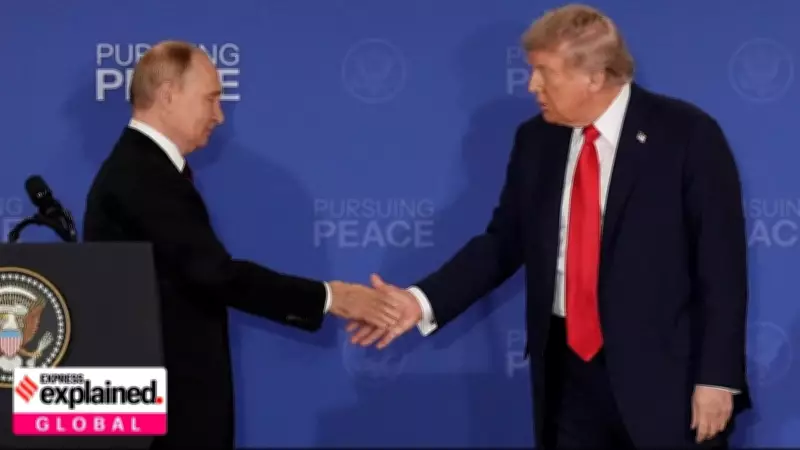
Looking ahead, the timing is particularly significant as it precedes the 2026 Review Conference of the Nuclear Non-Proliferation Treaty, where progress on disarmament is expected. While some hope for a reimagined arms control framework, the current geopolitical climate, marked by tensions under leaders like Donald Trump and Vladimir Putin, suggests that achieving a new agreement will be challenging.
In conclusion, the end of the New START Treaty represents a critical juncture in nuclear diplomacy. As the world navigates this uncertain landscape, preserving any form of mutual restraint remains crucial to avoiding the dangerous instability of unconstrained nuclear rivalry.