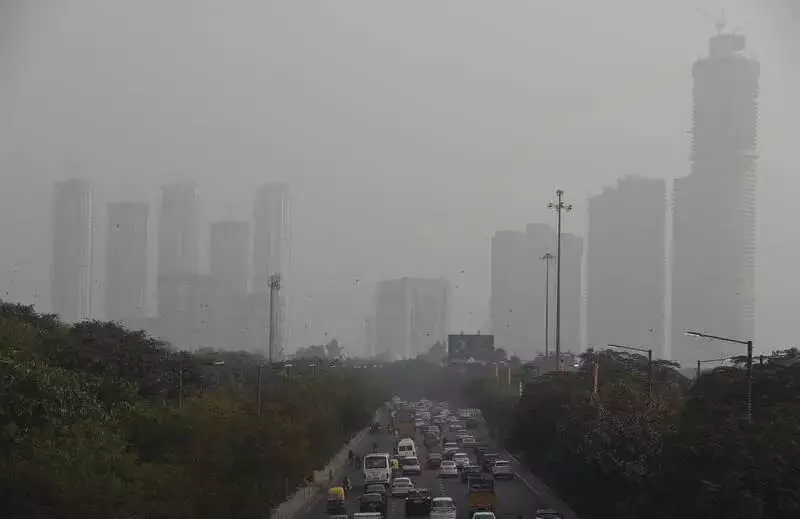
Residents of Delhi-NCR witnessed a slight but significant improvement in air quality on Monday, as increased wind speeds helped disperse accumulated pollutants. The day began with dense fog but ended with clearer skies and a shift from the 'very poor' to the 'poor' category across major cities in the region.
AQI Shows Notable Improvement Across NCR
Data from monitoring agencies revealed a positive trend. Noida's Air Quality Index (AQI) settled at 260, a notable drop from Sunday's 307, which was in the 'very poor' range. Similarly, Greater Noida saw its AQI improve to 236 from 316. In Ghaziabad, the reading was 262 ('poor'), better than the previous day's 298. The capital city, Delhi, also recorded an AQI of 244 ('poor'), receding from 307.
Meteorological Factors Behind the Relief
The India Meteorological Department (IMD) attributed this change to consistent south-westerly winds. Wind speeds reached around 15 kilometers per hour by Monday afternoon, aiding in the dispersion of harmful particles. According to the Indian Institute of Tropical Meteorology (IITM), surface winds from the northwest even touched speeds of up to 20 kmph during the afternoon before slowing down in the evening.

The day was marked by mist, with visibility recorded at 1,600 meters in Safdarjung and 1,500 meters in Palam. The minimum temperature dipped to 6.6 degrees Celsius, slightly lower than the previous day's 7.4 degrees. The maximum temperature was 18 degrees Celsius, a notch below the seasonal average.
Short-Lived Respite: Forecast for Coming Days
While the improvement is welcome, experts warn it may be temporary. The central government's air quality early warning system (EWS) has forecast that the AQI is likely to enter the 'moderate' category on Tuesday, January 6. However, this respite could be brief.
The outlook for January 7 and 8 indicates a return to the 'poor' range. For the coming six days, the overall air quality is predicted to remain in the 'poor to very poor' category. The IMD's forecast for Tuesday suggests surface winds will continue from the northwest, with speeds reaching up to 15 kmph in the morning and increasing to 22 kmph in the afternoon before decreasing again at night.
This pattern highlights the critical role wind plays in managing pollution levels in the landlocked National Capital Region, where calm conditions often lead to rapid accumulation of pollutants.