Mumbai's Persistent Air Pollution Crisis: Why AQI Remains Unhealthy in January 2026
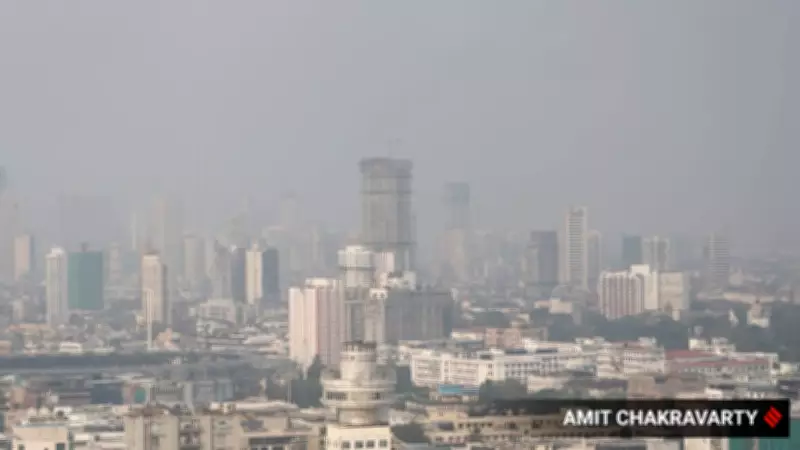
Mumbai, India's financial capital, continues to grapple with concerning air quality levels even during what is typically a cleaner period. According to data from the Central Pollution Control Board (CPCB), the city recorded moderate or unhealthy Air Quality Index (AQI) readings on a staggering 23 days during January 2026, marking a significant departure from expected seasonal patterns.
Alarming AQI Data and Monitoring Station Reports
The CPCB dashboard reveals that throughout January, Mumbai's AQI consistently ranged between 120 and 150, firmly placing it in the moderate category. This level is classified as unhealthy for sensitive groups, particularly affecting children and senior citizens who are more vulnerable to respiratory issues.
Out of the 28 active AQI monitoring stations across Mumbai, nearly all reported moderate pollution levels on most days during the month. Specific areas showed particularly concerning trends:

- Deonar recorded unhealthy AQI for 28 days, including one day with very poor air quality
- Ghatkopar experienced 23 days of moderate AQI
- Chembur reported 20 days of elevated pollution levels
To understand these measurements, it's important to note the CPCB's classification system: 0-50 is good, 51-100 satisfactory, 101-200 moderate, 201-300 poor, 301-400 very poor, and above 400 severe.
Delayed Monsoon Withdrawal and Climate Change Impacts
Speaking to The Indian Express, atmospheric scientist Gufran Beig, chair professor at the National Institute of Advanced Studies (NIAS) - Indian Institute of Sciences (IISc), identified a delayed monsoon withdrawal as the primary cause of Mumbai's prolonged winter season and poor air quality.
"Last year in large parts of north India, monsoon withdrawal got delayed by a fortnight. Due to which the winter season also kicked in late. As a result, this year winter is going to stay for a prolonged period of 10-15 days," Beig explained.
This extended winter period means Mumbai will continue experiencing slower winds and lower daytime temperatures, resulting in unhealthy AQI levels for at least two more weeks according to expert predictions.
Beig further elaborated on how climate change has disrupted natural processes: "Due to global climate change, the process of air reversal has become very, very slow. Mumbai's proximity to the western coast also makes it vulnerable to dust particles blown from the Thar desert and humid air from the Middle East."
Normally, Mumbai's coastal location and wind patterns help disperse pollutants, with wind reversal occurring every 2-3 days. However, during winter months when wind speeds decrease significantly, this reversal process can take up to 15 days, allowing pollutants to accumulate in the lower atmosphere.
Human Factors: Vehicular Emissions and Construction
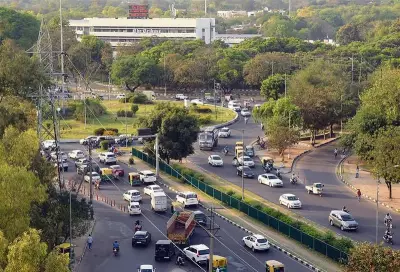
Officials from the Brihanmumbai Municipal Corporation (BMC) and Maharashtra Pollution Control Board (MPCB) have identified several man-made contributors to the city's pollution burden. Vehicular emissions stand out as a particularly significant factor, with Mumbai having the highest vehicle density among all Indian metro cities.
According to state government data, Mumbai currently has approximately 2,300 vehicles per kilometer, representing a concerning increase from previous years. In 2019, the density stood at 1,840 vehicles per kilometer, while in 2014 it was just 1,150 vehicles per kilometer.
An official explained: "Mumbai has the highest vehicular density compared to other regions in the country, and vehicular emission has been identified as the main cause behind pollution in the city. In addition to this, Mumbai is also recording significant construction activity for various private and public projects."
The combination of these anthropogenic factors with geographical and climatic conditions has created a perfect storm for deteriorating air quality in India's most populous city.

Broader Implications and Future Concerns
Mumbai's air pollution challenge represents more than just an environmental issue—it has serious public health implications, particularly for vulnerable populations. The city's unique geographical position, surrounded by the Arabian Sea on three sides, typically provides natural advantages for air quality management that are now being undermined by changing climate patterns and increasing human activity.
Experts warn that without significant intervention, Mumbai may continue experiencing elevated pollution levels post-monsoon each year. The intersection of delayed seasonal changes, global climate impacts, and local pollution sources creates a complex challenge requiring coordinated solutions from meteorological, environmental, and urban planning perspectives.
As Mumbai continues to develop and expand, balancing growth with environmental sustainability becomes increasingly crucial. The current AQI situation serves as a stark reminder of the interconnectedness of natural systems and human activities in shaping urban environmental quality.