Mumbai has embarked on its most expensive and ambitious attempt yet to rescue the severely polluted Mithi river, anchoring a new strategy on a massive underground diversion tunnel and a comprehensive overhaul of its tidal stretch. With a combined investment exceeding Rs 2,000 crore, this latest push aims to intercept nearly 60% of the sewage currently choking the waterway, adding to the over Rs 2,200 crore already spent on cleanup efforts in the past two decades.
Officials believe that if executed on schedule and backed by stringent controls on dumping and untreated effluents, these projects could significantly reduce pollution and mitigate flooding in some of the city's most vulnerable areas. However, environmental experts caution that engineering marvels alone cannot heal a river degraded by decades of unchecked urban activity.
The Engineering Marvel: A 6.6-Km Underground Sewage Highway
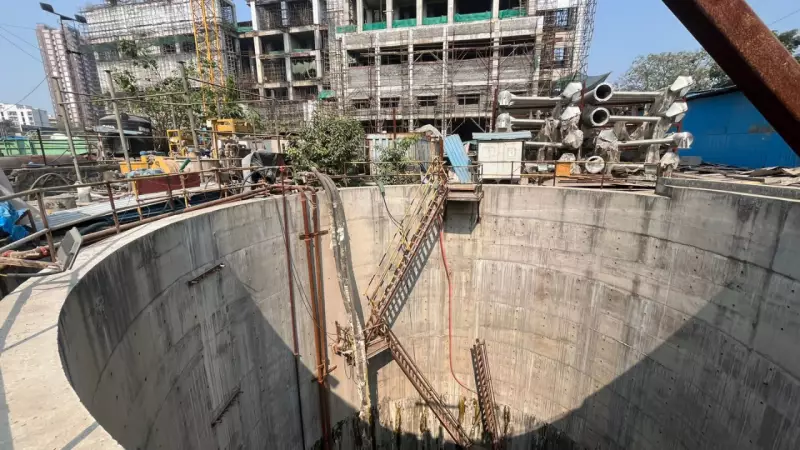
At the core of the cleanup strategy is a 6.6-kilometre-long diversion tunnel with a 2.6-metre diameter, designed to intercept dry-weather sewage before it ever reaches the Mithi. The system begins with special interceptor structures built at two of the river's biggest sewage carriers: the Bapat Nallah and Safed Pul Nallah.

These structures capture all dry-weather sewage, channel it into screening chambers to remove plastics and solid waste, and then send the flow spiraling down through vortex drop shafts. These shafts safely carry the sewage deep underground, where it enters the main tunnel. The tunnel then uses gravity to transport the waste all the way to Dharavi.
Key project details include:
- Major shafts: Located at Dharavi, Safed Pul, and Bapat Nallah.
- Project cost: Rs 455 crore.
- Construction began: October 2021.
- Tunnelling completion target: February 2026.
- Expected impact: Diverting approximately 168 million litres per day (MLD) of sewage, which is over half of the river's estimated total load of 309 MLD.
However, a critical caveat exists. The tunnel's benefits will only materialize once the new wastewater treatment plant in Dharavi is commissioned, likely by mid-2027. Until then, the tunnel will remain idle. Officials acknowledge that the river's current black, foul state is a direct result of untreated sewage flowing into it, and the full impact of this engineering feat will be visible only after the treatment plant becomes operational.
Overhauling the Tidal Stretch: A Rs 1,700 Crore Challenge
The second, even costlier component of the plan is a Rs 1,700-crore project targeting the heavily encroached, tide-affected stretch from CST Bridge at Kurla to the Mahim Causeway, including the Vakola river. This phase involves installing interceptor systems at four major Vakola nullahs to capture dry-weather sewage for treatment.
To combat the unique challenge of tides, new gate-and-pump systems will be installed at 18 outfalls to prevent seawater from pushing polluted river water upstream during high tide. The project also includes constructing retaining walls to stabilize eroded banks, building service roads for year-round maintenance, and setting up an 8-MLD pumping station at Machchimaar Colony.
The construction is estimated to take 48 months, excluding monsoon periods. Yet, the project faces a monumental hurdle: nearly 1,900 encroachments cover almost half of the project's footprint, complicating wall construction, pipe-laying, and road formation.
Two Decades of Effort and Persistent Challenges
For over 20 years, Mumbai has worked on reviving the Mithi through four major packages. The river, which originates from Vihar Lake and ends at the Mahim Causeway where it meets the Arabian Sea, is polluted through multiple pathways. Thirteen major nullahs drain domestic sewage and industrial effluents into it, while dense slum belts, workshops, and scrap yards along its banks discharge untreated waste. Encroachments, especially in the Bandra-Kurla Complex (BKC) stretch, choke the flow and trap pollutants.

Water quality monitoring reveals shocking levels of pollution, with parameters like Biochemical Oxygen Demand (BOD) and Chemical Oxygen Demand (COD) routinely exceeding safe limits. The stretch between Powai and Military Road is identified as the most polluted segment.
While experts welcome the scale of the new interception strategy, they warn against viewing these mega-projects as a complete solution. They emphasize that pollution inputs extend beyond sewage to include unmanaged solid waste, plastic, sludge, and industrial effluents. Unless these are stopped at the source through neighborhood-level enforcement, engineering solutions may offer only temporary relief.
There is also concern that large-scale interception could leave long stretches of the river dry outside the monsoon, altering its ecology unless treated water is returned in a controlled manner. The ultimate test, as one expert put it, is not just building complex infrastructure but enforcing discipline along the river's banks and restoring ecological balance. After two decades and thousands of crores, Mumbai's latest bet on the Mithi will depend on governance and long-term thinking as much as on tunnels and pumps.