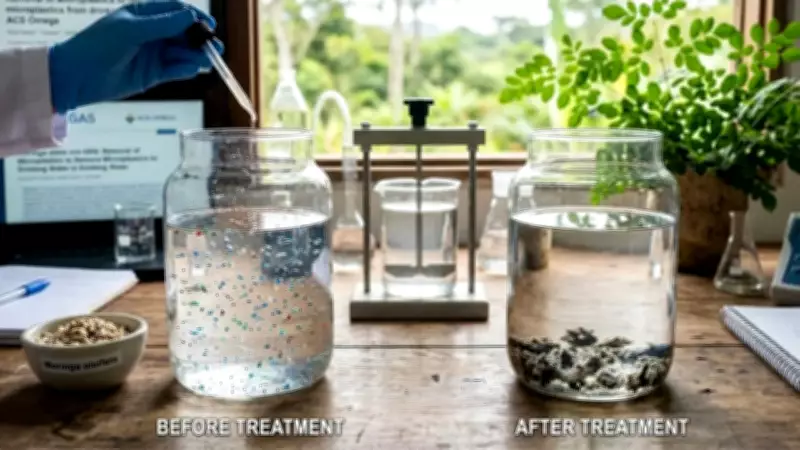
Brazilian Scientists Pioneer Natural Solution to Microplastic Contamination in Water
In a groundbreaking development, scientists at the Institute of Science and Technology of São Paulo State University (ICT-UNESP) in Brazil are advancing a novel and safe approach to treat drinking water. Their research has uncovered that a saline extract derived from the seeds of the Moringa oleifera tree can effectively eliminate microplastics from water supplies. By leveraging the coagulant properties inherent in moringa seed extracts, the team has engineered a sustainable and low-cost methodology for purifying drinking water from harmful microplastic particles.
Superior Performance Over Chemical Alternatives
The study, published in ACS Publications, reveals that the performance of this natural coagulant is comparable to or even surpasses that of traditional chemical coagulants like aluminium sulfate. Crucially, unlike chemical treatments, moringa seed extracts do not leave behind toxic residuals, marking a significant advancement in eco-friendly water purification technologies. This innovation represents a vital stride toward mitigating microplastic presence in global water resources through biodegradable, nature-based solutions.
How Moringa Extract Works to Clean Water
The research, titled 'Removal of Microplastics from Drinking Water by Moringa oleifera Seed: Comparative Performance with Alum in Direct and in-Line Filtration Systems', demonstrates that extracts from the Moringa oleifera tree serve as an effective natural coagulant. Microplastics and other contaminants in water typically carry a negative charge, which prevents particles from aggregating and keeps them suspended. When moringa seed extract is introduced, it neutralizes this negative charge, prompting the microplastics to coalesce into larger clumps via a process known as flocculation. These clumps can then be easily removed using standard sand filtration systems, streamlining the purification process.

Enhanced Efficacy in Alkaline Conditions
Laboratory tests focused on polyvinyl chloride (PVC) microplastics, which are recognized mutagens and carcinogens posing risks to human health. Using jar test methods, the moringa extract showed similar performance to aluminium sulfate. However, in more alkaline water environments, the moringa-based coagulant outperformed traditional chemical coagulants, highlighting its versatility and viability across diverse water treatment scenarios, including challenging conditions.
Advanced Validation Through Rigorous Testing
To ensure reliability, the researchers employed sophisticated analytical techniques beyond standard tests. They exposed PVC microplastics to UV rays to simulate natural degradation in uncontrolled settings, such as floating in water bodies. Utilizing advanced equipment like scanning electron microscopy (SEM), high-speed cameras, and laser measurements, they confirmed significant particle reduction and observed the aggregate size of flocculated particles. These methods validated that moringa extract remains effective under real-world environmental conditions, akin to those found in natural water sources contaminated with microplastics.
The Environmental Edge of Moringa
Traditional water treatment coagulants, such as those based on aluminium and iron, are non-biodegradable and often leave toxic residues, raising regulatory and environmental concerns. In contrast, moringa offers a more sustainable alternative, particularly beneficial for less populated areas lacking the infrastructure for complex chemical treatments. As a naturally occurring, edible seed, moringa reduces the ecological footprint of water treatment processes while addressing the pervasive issue of microplastic contamination in human drinking water, promoting both health and environmental stewardship.