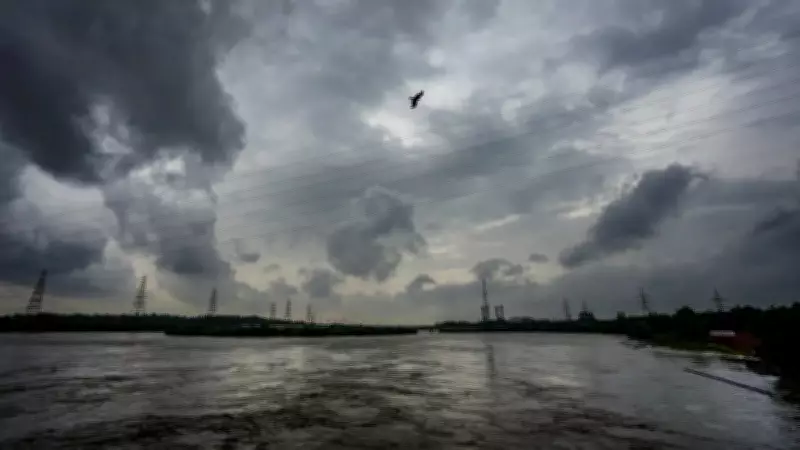
The India Meteorological Department (IMD) has revised its monsoon forecast for 2026, citing delays in the onset of the southwest monsoon over the Indian subcontinent. The monsoon, which typically arrives over Kerala by June 1, is now expected to hit the southern coast around June 5-7, marking a delay of nearly a week.
Why Is the Monsoon Delayed?
Meteorologists attribute the delay to several factors. The primary reason is the weak cyclonic circulation over the Bay of Bengal, which has slowed the advancement of monsoon winds. Additionally, the Madden-Julian Oscillation (MJO), a key driver of tropical rainfall, is currently in an unfavorable phase. The MJO's position over the Pacific Ocean has suppressed convection over the Indian Ocean, delaying the monsoon's onset.
Another contributing factor is the warmer-than-usual sea surface temperatures in the Arabian Sea, which have altered wind patterns. The IMD also noted that the monsoon trough, a crucial component for rainfall distribution, has been slow to form. These conditions have collectively pushed back the monsoon's arrival.

IMD's Revised Forecast
The IMD initially predicted the monsoon would arrive on May 31, with a margin of error of four days. However, as the date approached, the agency revised its forecast to June 5-7. The IMD has also updated its seasonal outlook, stating that the monsoon is likely to be normal, with rainfall at 96-104% of the long-period average. However, the delay could affect the distribution of rainfall across the country.
The IMD uses a combination of satellite data, ocean buoys, and weather models to predict the monsoon's onset. The agency has admitted that forecasting exact dates remains challenging, especially when global weather patterns are in flux.
Impact on Agriculture and Economy
The delay in the monsoon has raised concerns among farmers, particularly in rain-fed regions. The kharif sowing season, which begins with the monsoon, could be delayed, affecting crops like paddy, pulses, and oilseeds. The agriculture ministry has advised states to prepare contingency plans, including the use of drought-resistant seeds and alternative irrigation methods.
Economists warn that a delayed monsoon could impact food prices and inflation. However, if the monsoon catches up in June, the overall impact may be limited. The IMD has assured that the monsoon will cover most of the country by mid-July, which is within the normal timeline.
Historical Context and Future Outlook
Delays in the monsoon are not uncommon. In recent years, the monsoon has arrived late in 2020, 2022, and 2024. Climate change is making monsoon patterns more erratic, with longer dry spells and intense rainfall events. The IMD is working to improve its forecasting models to account for these changes.
For now, the nation waits for the monsoon to arrive. The IMD will continue to issue updates as the situation evolves.