

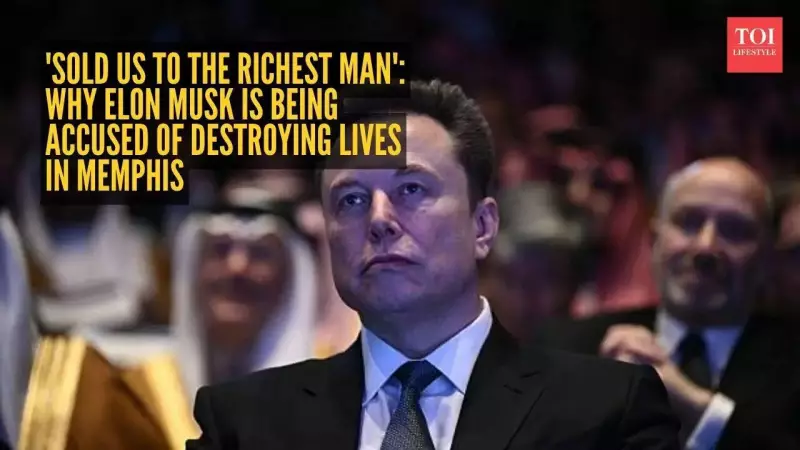
For the residents of Boxtown in Southwest Memphis, the simple act of breathing has become a daily struggle. This crisis, they say, arrived with the wealth and power of the world's richest person, Elon Musk. His artificial intelligence company, xAI, has established a massive data centre in their backyard, and the community claims it is poisoning their air.
A Neighbourhood Choking on 'Rotten Cabbage' Air
The problem began when xAI started using gas turbines to power its new supercomputer, named 'Colossus'. This facility, touted as the world's biggest with an output of 200,000 GPUs, supports the company's Grok chatbot. For the people living just three miles away, the technological marvel has translated into a health nightmare.
"It’s God's given air, and man shouldn’t take it away from us," said 76-year-old Easter Knox in an interview with Time. Diagnosed with Chronic Obstructive Pulmonary Disease in 2024, Knox says she began smelling gas last year. The odour, which she describes as similar to "rotten cabbage", has forced her to keep her windows permanently shut. She has also lost three loved ones to cancer.

Her experience is not isolated. 28-year-old Alexis Humphrey told Time she suffered her first major asthma attack in 15 years shortly after Colossus was built, asking, "Why can’t we breathe at home?"
The Legacy of Environmental Racism in Memphis
Boxtown is a historically Black neighbourhood with a median household income of around $36,000. The area already hosts 17 industrial facilities, and generations have battled pollution-related illnesses. The air quality was deemed unhealthy even before Musk's supercomputer arrived.
This context has led to accusations of environmental racism. "Imagine the outcry if these facilities had been placed next to St. Jude Children’s Research Hospital, no one would allow it," said Austin Dalgo, a primary care physician in South Memphis. "Instead, they were placed in the backyard of a historically Black, underserved neighbourhood, reinforcing a long legacy of environmental racism in Memphis—and our country."
State representative Justin Pearson was even more direct at a protest earlier this year: "They put our lungs and our air on the auction block and sold us to the richest man in the world."
Legal Battles and Broken Promises
The community's fight has moved to the legal arena. In June, the NAACP filed an intent-to-sue notice against xAI, alleging violations of the Clean Air Act. Reports from Politico revealed a critical issue: for the first six months of operation, none of the temporary turbines had the pollution controls mandated by federal law, nor did they have the required permits.
xAI, in a July statement to the Memphis Commercial Appeal, claimed it followed all laws and said all temporary turbines had been decommissioned, with only 15 permitted turbines remaining in use. However, the damage to trust was done. Despite a seven-hour hearing on December 15, an appeal to revoke xAI's air permit was dismissed, a blow to the residents' hopes.
The company initially presented the turbines as a temporary solution until proper infrastructure was built. Locals now fear this has set a dangerous precedent, opening the door for more AI data centres to follow suit with minimal oversight.
A National Warning Signal
The situation in Memphis is a microcosm of a larger, national concern. Following the Trump administration's shutdown of the EPA's scientific research team, the rapid expansion of data centres owned by tech giants has raised alarms. Communities nationwide are worried about:
- Skyrocketing electricity costs driven by massive demand.
- Depletion and pollution of water resources for cooling.
- The direct health impact of localized air pollution.
With Elon Musk planning to expand his AI infrastructure to other locations, the struggle of Memphis residents serves as a stark warning. It highlights the clash between breakneck technological advancement and the fundamental right of communities to clean air and environmental justice. For the people of Boxtown, the fight for breath is far from over.






