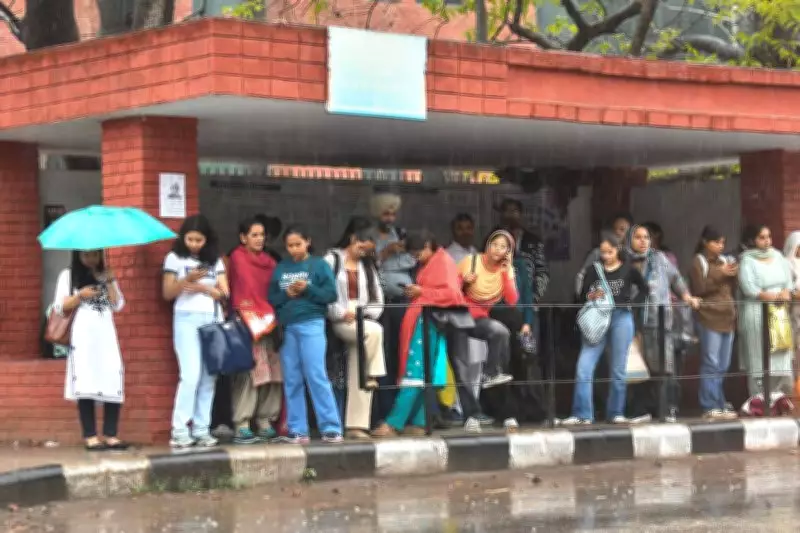
March Weather Reversal: Western Disturbance Cools Chandigarh Tricity
In a dramatic meteorological twist, a late-March western disturbance has swept across the Chandigarh Tricity region, bringing thunderstorms, gusty winds, and a sharp decline in temperatures. This event marks a stark contrast to the premature summer conditions that had begun to settle in early, following a winter marked by significant rainfall deficits.
Temperature Plunge and Rainfall Data
The India Meteorological Department's Chandigarh centre recorded 9.8 mm of rainfall over the past 24 hours at the city's weather observatory. The maximum temperature settled at 25.1°C, which is 4°C below normal for this time of year. More notably, the minimum temperature plunged to 9.6°C, a steep 6°C below normal, evoking memories of mid-winter chill rather than the tail-end of March.
Relative humidity soared to 94% at its peak during the night and morning, with daytime lows remaining at 52%. This has given the city an unusually humid and overcast character, more typical of monsoon fringe conditions than pre-monsoon March.

Regional Impact and Historical Context
Across the region, the weather system brought light to moderate rain with thunderstorms to many places in Haryana and a few in Punjab. Gusty winds and hailstorms lashed isolated locations in Punjab. In Mohali, the weather station recorded a maximum temperature of 24.9°C and a minimum of 12°C, with 4 mm of rainfall in the past 24 hours. Panchkula, sharing the same weather pocket as Chandigarh, remained similarly cool and overcast.
This winter was characterized by a pronounced rainfall deficit across Punjab, Haryana, and Chandigarh, with the region receiving far less than its seasonal quota of western disturbance-driven rain and snowfall in the hills. February had turned prematurely warm, with temperatures climbing unusually early, effectively shortening winter and accelerating the onset of summer-like conditions by early March.
Against this backdrop, the late-March western disturbance is a statistical rarity and a meteorological reset. Seasonal rainfall at Chandigarh from March 1 to March 21 stands at 21.4 mm, which is 62.1% above the seasonal normal for this period. This suggests that the current spell has single-handedly compensated for weeks of dry weather.
Forecast and Future Outlook
The worst of the weather is now past. IMD's five-day forecast for the Tricity projects a partly cloudy sky on Saturday, March 22, giving way to mainly clear conditions from Sunday onward. Maximum temperatures are expected to recover to 26°C over the weekend, edging up to 27-28°C by mid-week.
Minimum temperatures will also climb, from 12°C on Saturday to around 15°C by Thursday, March 26. This signals that the brief, welcome reprieve is drawing to a close, and pre-monsoon heat will begin reasserting itself.
At the broader regional level, Punjab's average maximum temperature, though higher than previous days, remains appreciably below normal by 3.2°C. In Haryana, despite a bounce from previous lows, temperatures are still 4.2°C below seasonal norms, underscoring how significantly this disturbance has disrupted the March heat curve.