

Maharashtra Records Alarming Loss of 675 Leopards Over Five-Year Period
In a sobering revelation that underscores the escalating human-wildlife conflict, Maharashtra has witnessed the death of 675 leopards between January 2021 and early February 2026. This critical data, obtained through a Right to Information (RTI) application filed by Nagpur-based activist Abhay Kolarkar, paints a grim picture of the survival challenges facing this iconic species across the state.
Accidents Emerge as Primary Killer, Accounting for Nearly 40% of Deaths
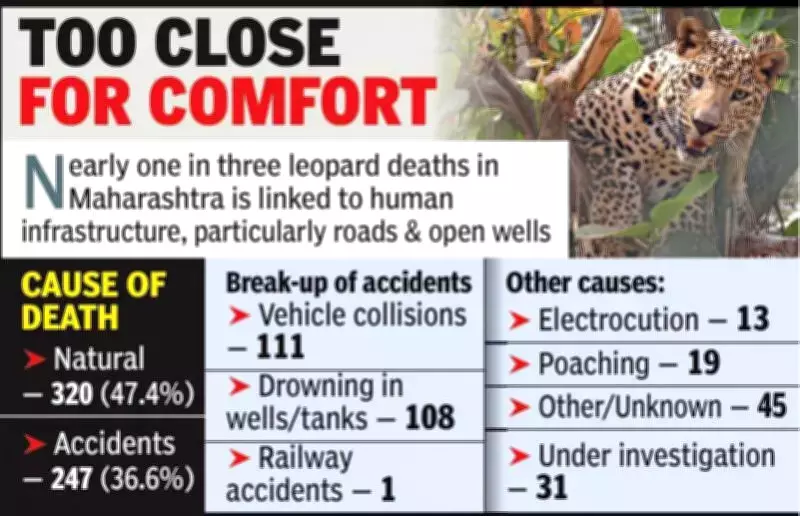
The comprehensive analysis of leopard mortality records reveals that accidents constitute the single largest cause of death, responsible for nearly four out of every ten leopard fatalities. This category includes 99 animals killed in vehicle collisions, 91 leopards that drowned after falling into uncovered wells, tanks, or other water bodies, and two deaths resulting from railway accidents. Alarmingly, the exact circumstances remain unexplained for 55 additional cases classified as accidental deaths.
Wildlife experts have consistently identified these accident-related fatalities as the most persistent and growing threat to leopards in Maharashtra's increasingly human-dominated landscapes. The proliferation of roads, railways, and agricultural infrastructure continues to fragment habitats and create deadly traps for wildlife.

Geographical Hotspots: Nashik and Pune Circles Bear the Brunt
The mortality data reveals a stark geographical concentration, with the Nashik and Pune forest circles together accounting for nearly half of all recorded leopard deaths during this five-year period. This pattern reflects the intense interface between humans and leopards in western Maharashtra, where expanding urban areas, vineyards, and agricultural farms increasingly overlap with traditional leopard territories.
Year-wise fluctuations show dramatic variations in mortality rates. The year 2021 recorded the highest number of deaths at 167, followed by 144 fatalities in 2024 and 137 in 2025. In contrast, 2023 saw the lowest mortality with 77 deaths, suggesting that conservation efforts or environmental factors may have temporarily reduced pressures.
Poaching and Unexplained Deaths Raise Additional Concerns
While poaching represents a smaller proportion of overall mortality compared to accidents, the RTI data still documented 30 leopard deaths linked to illegal activities. This includes 13 animals electrocuted and 17 cases involving hunting, trapping, or direct poaching. Conservationists emphasize that even these limited numbers represent significant losses for a protected species.
Perhaps more troubling is the growing number of cases where investigators could not determine the exact cause of death. The data lists 45 fatalities under "other or unknown causes," along with 31 cases that remain under active investigation. Experts caution that this trend indicates possible delays in post-mortem examinations, challenges in wildlife forensic analysis, or potentially concealed wildlife crimes that require more rigorous investigation.
Conservationists Sound Alarm for Urgent Infrastructure Improvements
Conservation advocates point to these alarming numbers as evidence of the urgent need for wildlife-friendly infrastructure across Maharashtra. Uncovered wells in agricultural fields continue to function as death traps, particularly during dry seasons when leopards venture closer to human settlements in search of water. Similarly, increasing road traffic through forest and semi-forest landscapes has dramatically raised the risk of fatal vehicle collisions.
Wildlife experts have repeatedly called for specific interventions including wildlife crossings, speed restrictions, and warning systems in known leopard corridors, particularly along major highways connecting the Nashik, Pune, and Mumbai regions. Simple measures such as covering open wells, installing escape ramps in water tanks, and creating safe passage structures on roads could significantly reduce accidental deaths.

With the state already reporting 10 leopard deaths in the current year, conservationists warn that without immediate implementation of these preventive measures, accidental fatalities will continue to pose a major threat to leopard populations across Maharashtra. The data serves as both a warning and a roadmap for targeted conservation action to protect this vulnerable species in one of India's most populous states.





