

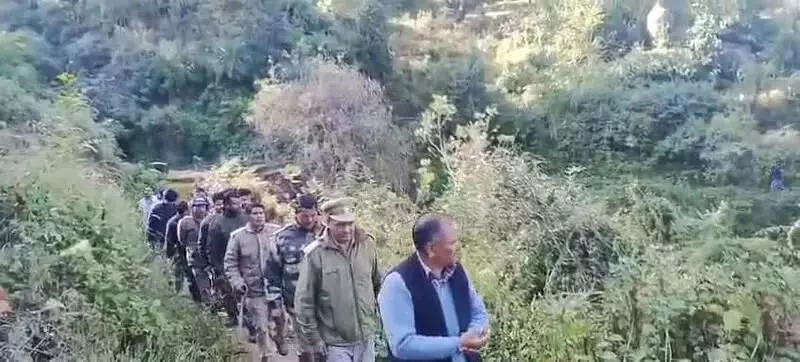
A 42-year-old man was killed in a leopard attack in Uttarakhand's Pauri Garhwal district on Thursday, marking the third such fatal incident in the region within a single month. The tragic event has intensified public anger and fear over the escalating human-wildlife conflict in the hill state.
Details of the Fatal Attack
The victim, identified as Rajendra Nautiyal, was returning home when a leopard ambushed him. The animal dragged him into nearby bushes. Villagers, along with a search team from the forest department, later recovered his body. The attack was particularly gruesome, with residents reporting that the leopard had partially eaten the victim.
"His body was eaten by the leopard — the stomach was gone. He was attacked near a river while going about his morning routine. This is not an accident; the animal attacked and ate him. It is a man-eater," said Sachin Kumar, a local resident.

Mounting Public Anger and Official Response
Enraged villagers refused to accept Nautiyal's body until authorities promised to eliminate the leopard and senior officials visited the site. The victim was the sole breadwinner for his family, a fact highlighted when District Magistrate Swati Bhadauria met them to offer assurances of support.
This incident follows two other fatal leopard attacks in recent weeks in the villages of Koti and Pokhra, where two women lost their lives. Additionally, a four-year-old boy sustained a head injury in a suspected leopard attack. Earlier protests in Koti had led to a two-day blockade of a state highway, forcing the forest department to issue orders to trap or tranquilise the animal.
Following Thursday's attack, Pauri Garhwal Divisional Forest Officer Abhimanyu Singh stated that two teams of 15 personnel have been deployed to track the leopard. "Two departmental shooters, two cages, and camera traps have been placed to trap the animal. If that fails, it will be eliminated," he said.
Understanding the Spike in Conflicts
DFO Singh provided context for the increased attacks, explaining that November and May typically see maximum incidents. This period coincides with the weaning of leopard cubs, making mother leopards more defensive and aggressive. Furthermore, increased human movement into forests after the monsoon to collect fodder and wood elevates the risk. Dense vegetation during this time reduces visibility and provides ideal cover for wildlife ambushes.
The forest department has issued advisories urging residents to:
- Avoid forested areas at dawn and dusk.
- Move in groups when necessary.
- Carry lights and sticks for protection.
As a precautionary measure, an anganwadi centre in the affected area has been closed for four days.
According to official forest department data, leopards have killed more than a dozen people in Uttarakhand this year alone, underscoring the severe and ongoing nature of the human-wildlife conflict crisis in the state.






