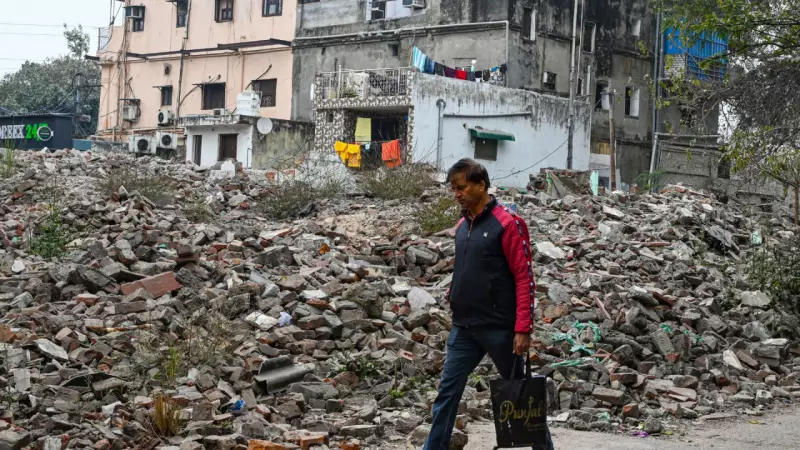
As Delhi stepped into the year 2026, a stark environmental scar continued to fester in the heart of the capital. The area around Khyber Pass, near Delhi University in north Delhi, persists as a ravaged, post-apocalyptic landscape, a relentless source of dust pollution despite official action taken over a year prior. A report from November 2024 first highlighted the emergence of this new dust bowl, a problem that has seen little resolution.
A Landscape of Neglect and Demolition
The genesis of the current crisis dates back to August 4, 2024. On that day, the Central government's Land and Development Office (L&DO) carried out a demolition drive, razing several illegal structures at Khyber Pass. The action was intended to clear the encroached land. However, nearly a year and a half later, the cleared plot lies utterly unattended. Instead of redevelopment or greening, the vast tract has become a perpetual generator of fine particulate matter, plaguing the locality.
Resident Anguish Amidst City-Wide Improvements
While recent days have seen notable improvements in Delhi's overall air quality, aided by overnight winds that dispersed fog, the situation at Khyber Pass tells a different story. On a day when the city's average AQI stood at 270 (categorised as 'poor') at 12 pm, conditions in this specific stretch reflected far greater negligence. The unchecked dust pollution forms a constant haze, deeply affecting those who live and work nearby.

Local residents express profound anguish and frustration over the prolonged neglect. "Who will take responsibility for this? Who will take care of our lungs?" asked a distressed local, pointing to the enveloping dust. Their questions highlight a critical gap between administrative action and sustainable remediation, leaving a community to bear the health consequences of an unresolved environmental hazard.
The Unfinished Task and Lingering Questions
The core issue is no longer the illegal structures but the aftermath of their removal. The authorities' job seemingly ended with the demolition, with no plan for managing the resultant barren land. This half-measure has effectively traded one problem for another, creating a persistent point source of pollution. The case of Khyber Pass underscores a broader challenge in urban governance: the need for comprehensive follow-through on corrective actions. It raises urgent questions about inter-agency coordination and long-term environmental stewardship in India's capital, even as other areas see temporary relief.
About the Author: Anindya Chattopadhyay, the photo editor with The Times of India, Delhi, began his career in 2002. A graduate with a diploma in photography from Jadavpur University, he has extensive experience covering diverse subjects from politics to natural disasters.