Kheoni Wildlife Sanctuary Transforms from Tiger Corridor to Breeding Hub in MP
For decades, the Kheoni Wildlife Sanctuary was known in conservation circles as a "quiet corridor"—a transit point for wandering tigers moving between the dense forests of Ratapani and the distant Melghat Tiger Reserve. As of early 2026, Kheoni has shed its reputation as a mere pathway, emerging as the primary breeding hub and residence for the Royal Bengal Tiger in the Malwa-Nimar region of Madhya Pradesh.
The Heart of the Success: Yuvraj & Meera
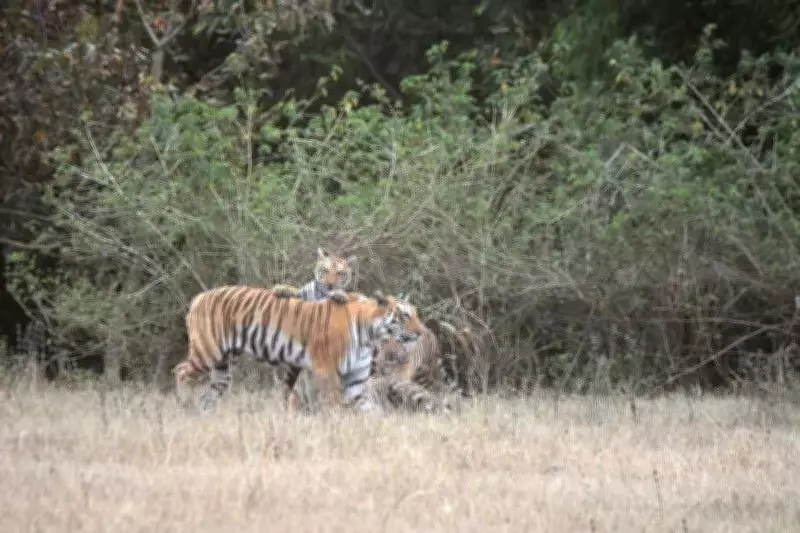
The heart of this success story beats in the sanctuary's dominant pair—Yuvraj and Meera. Their presence has provided a "biological seal of approval" for the sanctuary's health, indicating a thriving ecosystem. The excitement reached a fever pitch last month when the Dewas forest department confirmed the open secret: a healthy litter of three new cubs, marking a significant milestone in tiger conservation efforts.
This news has led to the rebirth of not only a tiger corridor but also of Madhya Pradesh's first wildlife sanctuary. Spanning 134.7 square kilometers, the Kheoni sanctuary has seen its resident tiger population swell to approximately a dozen individuals. What was once a "lucky break" for a weary forest guard is now a daily reality for tourists: The tigers of Kheoni have become so "common" and bold that they are now frequently spotted lounging directly on safari tracks, offering unprecedented wildlife viewing opportunities.

Biological Miracle and Prey Base
Superintendent Vikash Mahorey revealed that Meera's cubs, now approximately four months old, were recently caught on camera traps feeding on prey. "During the initial months, Meera remained elusive and vigilant to protect her young," Mahorey said, adding, "Now that they are consuming solid food and exploring. They are the stars of the sanctuary." This successful breeding has been described as a biological miracle, highlighting the sanctuary's robust ecological conditions.
DFO Amit Singh emphasized that such growth is only possible with a healthy prey base and a secure environment. The sanctuary's management has focused on enhancing these factors, contributing to the tiger population boom and ensuring the long-term sustainability of the ecosystem.
Biodiversity Beyond Tigers
While the "Tiger Boom" takes center stage here, Kheoni's biodiversity extends far beyond the big cats. The sanctuary has recently recorded the rare sighting of Wild Dogs (Dholes), adding a new layer to its predator hierarchy and indicating a balanced food web. The forest is also home to the four-horned antelope (Chousingha), leopards, sloth bears, hyenas, and jackals, showcasing a diverse mammalian community.
As avian wonders, there are over 165 bird species, including the state bird—the Indian Paradise Flycatcher—and the elusive Sirkeer Malkoha. This rich biodiversity underscores the sanctuary's role as a critical habitat for multiple species, not just tigers.
Historical Expansion and Future Plans
Historically, Kheoni's boundaries were expanded in 1982 to include the jungles of Sehore, a move that aided the current population explosion by providing more space and resources. The state government is now looking to capitalize on this success with ambitious conservation plans.
Plans are underway to establish the Omkareshwar Wildlife Sanctuary, which will be attached to Kheoni. This expansion aims to serve as a crucial bridge in the "Tiger Corridor" connecting central Madhya Pradesh to Maharashtra. By creating this continuous stretch, authorities aim to facilitate genetic exchange and provide a natural "spillover" zone for young tigers like Meera's cubs as they eventually seek their own territories, ensuring genetic diversity and population health.
A Roaring Success Story
For now, the "Striped Rebirth" of Kheoni stands as a shining example of how tigers can turn a quiet forest into a roaring success. This transformation from a transit corridor to a breeding hub demonstrates the effectiveness of targeted conservation efforts, habitat management, and community involvement in wildlife protection.

The sanctuary's journey serves as an inspiration for other wildlife areas across India, proving that with proper care and strategic planning, endangered species can thrive and ecosystems can flourish. As Kheoni continues to evolve, it remains a beacon of hope for tiger conservation and biodiversity preservation in the region.