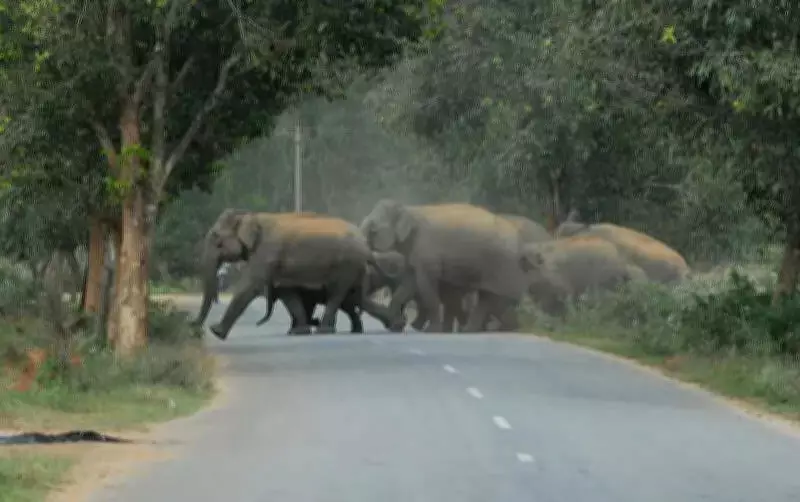
Karnataka Forest Department Launches Major Railway Barricade Project to Combat Human-Elephant Conflict
In a significant move to address escalating human-elephant conflicts, the Karnataka forest department has initiated work on a comprehensive 9.6-kilometer railway barricade in Saragur taluk, located on the periphery of the Bandipur tiger reserve. This strategic infrastructure project aims to create a robust physical barrier to reduce recurring incidents where elephants stray into human settlements and agricultural areas.
Current Progress and Tender Process for Barricade Installation
According to Forest Minister Eshwara B Khandre, the installation of 1.6 kilometers of the railway barricade is already underway in the Nugu wildlife zone. The tender process for the remaining 8 kilometers is currently in progress, ensuring systematic implementation. Of the total barricade planned for the current fiscal year, 2.2 kilometers are specifically designated as part of ongoing mitigation efforts to provide immediate relief in conflict-prone zones.
Comprehensive Action Plan for 2025-26 Including Maintenance of Existing Structures
Minister Khandre provided these details in response to a question raised in the Assembly by HD Kote MLA Anil Chikkamadu. The minister elaborated that the department's action plan for 2025-26 includes not only the new barricades but also the maintenance of 21.8 kilometers of existing solar-powered fencing and 10 kilometers of elephant-proof trenches in Saragur taluk. This holistic approach ensures that both new and existing deterrents remain effective over time.

Background of Saragur Taluk and Previous Infrastructure Developments
Saragur taluk in Mysuru district encompasses parts of the Bandipur wildlife sanctuary and the Moleyuru wildlife zone, both of which have experienced repeated elephant movements into areas used by humans. To combat this, the forest department has previously constructed 37.2 kilometers of railway barricades in the region. Additionally, 59.2 kilometers of elephant-proof trenches and 26.3 kilometers of solar-powered fencing have been built and are actively maintained to reinforce the barrier network.
Enhanced Field-Level Response Systems and Task Force Deployment
The government has significantly strengthened field-level response mechanisms to manage wildlife intrusions proactively. An elephant task force comprising 32 contract workers has been established, with eight members specifically deployed in the Nugu and Moleyuru wildlife zones. Five dedicated teams are engaged in driving elephants back into forested areas whenever they stray toward human settlements or farmland, minimizing potential conflicts.
Community Involvement and Advanced Monitoring Technologies
Along the forest fringes, 11 'forest friend' teams, consisting of local residents and forest department personnel, have been stationed for regular patrol duties. These teams enhance surveillance and foster community participation in conservation efforts. The department is also leveraging advanced technology, utilizing thermal drones to monitor wildlife movement, particularly in vulnerable border areas where conflicts are most likely to occur.
Relocation Strategy for Problematic Elephants and MLA's Concerns
Officials stated that elephants involved in fatal attacks on humans are captured and relocated as part of a broader conflict-management strategy. This measure aims to address immediate threats while maintaining ecological balance.
Speaking to the media, HD Kote MLA Anil Chikkamadu highlighted that human-wildlife conflict remains a severe issue in his constituency, which covers approximately 12 forest ranges of the Bandipur and Nagarahole tiger reserves. He reported that over the past eight years, 10 people have died in wildlife attacks within the constituency—eight due to tiger attacks, including three in the current fiscal year, and two from elephant attacks.

Call for Stronger Border Protection Measures
Chikkamadu acknowledged that the nearly 10-kilometer rail barricade would help reduce elephant intrusions to some extent. However, he emphasized the need for even stronger border protection, advocating for the installation of 12-foot-high mesh fencing to prevent tigers from attacking local residents. This underscores the ongoing challenges and the necessity for multi-faceted solutions to ensure both wildlife conservation and human safety in the region.