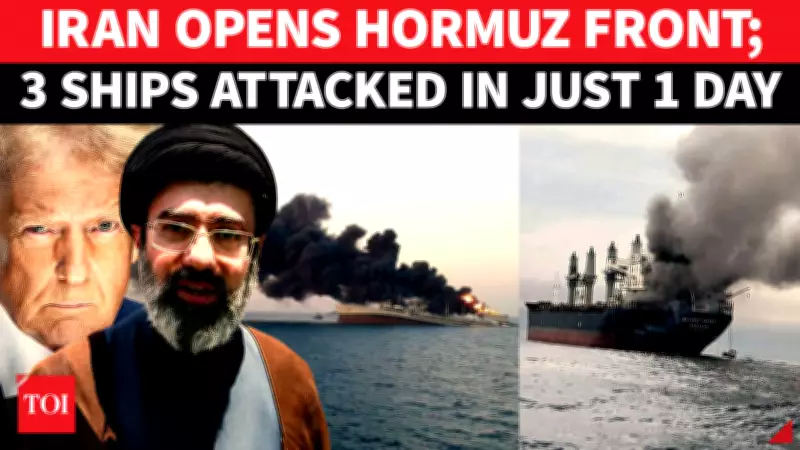
Iran's Revolutionary Guard Corps Attacks Three International Ships in Strait of Hormuz
In a dramatic escalation of maritime tensions, Iran's Islamic Revolutionary Guard Corps (IRGC) has launched direct attacks on at least three international container ships navigating the strategic Strait of Hormuz. This aggressive action comes despite an ongoing ceasefire extension, transforming the world's most vital shipping lane into what observers describe as a "shooting gallery" of global trade.
Chaos in Critical Waterway
The attacks involved both gunfire and rocket-propelled grenades (RPGs) targeting vessels in the narrow waterway that carries approximately one-fifth of the world's oil supply. Among the targeted ships were Liberia-flagged commercial vessels that sustained direct hits to their bridges, compromising navigation systems and crew safety. IRGC gunboats reportedly ignored repeated radio warnings from international naval forces, demonstrating a deliberate defiance of established maritime protocols.
The timing is particularly significant as these assaults occur against the backdrop of continued U.S. naval blockade operations and what Iranian authorities describe as "traffic control" measures in the region. This convergence of military posturing has effectively replaced the usual "glitter" of bustling commercial activity with what military analysts term "the fog of war"—a dangerous environment where communication breaks down and miscalculations can lead to broader conflict.

Broader Regional Implications
This development represents Iran's most direct reassertion of control over the strategic chokepoint since tensions began escalating in the region. The Strait of Hormuz serves as the only sea passage from the Persian Gulf to the open ocean, making it indispensable for global energy markets and international trade routes. Any sustained disruption here could trigger immediate economic consequences worldwide, particularly affecting oil prices and shipping insurance rates.
Regional powers are watching closely as this incident unfolds. The attacks demonstrate Iran's willingness to challenge international maritime norms even during nominal ceasefire periods, suggesting that diplomatic efforts to stabilize the region face significant obstacles. The situation creates particular challenges for ongoing negotiations between global powers seeking to prevent broader Middle East conflict.
International Response and Future Outlook
Maritime security experts express deep concern about the precedent set by these attacks. When state actors directly target commercial shipping in international waters, it undermines centuries of established maritime law and threatens the fundamental principles of freedom of navigation. The international community now faces difficult questions about how to respond to such provocations while avoiding escalation into wider military confrontation.
The coming days will likely see increased naval deployments to the region as global powers seek to protect shipping lanes while managing the delicate balance between deterrence and diplomacy. For now, the Strait of Hormuz remains a flashpoint where geopolitical tensions have boiled over into direct military action against civilian vessels, creating uncertainty for global trade and regional stability alike.