

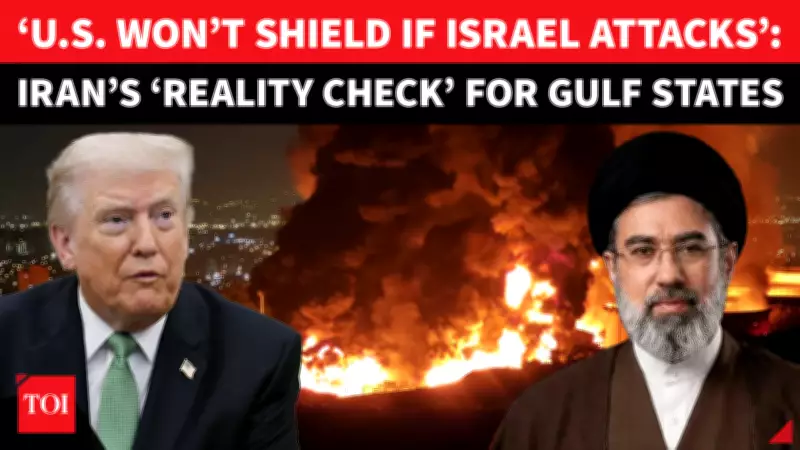
Iran Warns Gulf Nations Over US Military Bases; Pushes For New Regional Alliance
Iran has delivered a sharp and unequivocal warning to Gulf nations, directly challenging the strategic value of American military installations in the region. In a bold geopolitical maneuver, Tehran is actively urging the formation of a new regional security alliance that would explicitly exclude both the United States and Israel, signaling a potential major realignment of Middle Eastern power structures.
Tehran's Sweeping Ceasefire Demands
The proposals, which are understood to be backed by Iran's Islamic Revolutionary Guard Corps (IRGC), include a comprehensive set of ceasefire conditions. These demands are sweeping in scope and ambition. Firstly, Iran insists on the complete shutdown of all US military bases located within Gulf Cooperation Council (GCC) countries. Secondly, it calls for the immediate and unconditional lifting of all international sanctions imposed on the Islamic Republic. Thirdly, and perhaps most controversially, Tehran demands enhanced control over maritime transit through the critical Strait of Hormuz, a vital global oil chokepoint.
The Trump administration has swiftly and categorically rejected these proposals, labeling them as unrealistic and non-starters for any diplomatic negotiation. This rejection underscores the deep and seemingly unbridgeable divide between Washington's strategic interests and Iran's regional ambitions.

A Push for Geopolitical Realignment
As regional tensions continue to escalate, Iran's diplomatic offensive represents a concerted push for a significant geopolitical shift. The objective appears to be nothing less than the redefinition of traditional alliances and security architectures that have dominated the Middle East for decades. By questioning the utility of US protection and proposing an indigenous security framework, Iran is positioning itself as a regional leader capable of challenging Western influence.
This move comes amid a backdrop of heightened military posturing and incidents, including reported drone surveillance of US installations and strikes, which have kept the region on a knife's edge. The Iranian strategy seems to leverage these tensions to force Gulf nations into a difficult choice: continue reliance on a distant superpower or consider a new security paradigm led by a regional power.
Regional and Global Implications
The implications of Iran's proposal are profound. For Gulf nations, it presents a strategic dilemma involving their long-standing security partnerships with the United States. For global powers, it threatens to destabilize a region crucial to world energy supplies and international trade. The control over the Strait of Hormuz is a particularly sensitive issue, given that a significant portion of the world's seaborne oil passes through this narrow waterway.
Iran's warning and alliance proposal mark a critical juncture in Middle Eastern politics. The coming weeks and months will reveal whether Gulf capitals find Tehran's vision compelling or if they reaffirm their commitments to existing security structures led by Washington. The outcome could reshape the geopolitical landscape of one of the world's most volatile regions for years to come.






